




How to Choose the Right Dinnerware Supplier for Your Restaurant

Choosing the right dinnerware supplier is an important decision for restaurants, cafés, hotels, and catering businesses. Dinnerware is not simply a table setting item—it affects food presentation, daily operations, replacement costs, customer experience, and even your restaurant’s brand image.
For restaurant buyers, choosing a supplier based only on the lowest price can create problems later. Inconsistent quality, high breakage rates, delayed delivery, limited customization, and difficulties with repeat orders can increase the real cost of purchasing dinnerware.
So, how should you evaluate a restaurant dinnerware supplier?
This guide explains the key factors restaurant owners, purchasing managers, importers, and hospitality buyers should check before placing a bulk order.
1. Start With Your Restaurant’s Needs
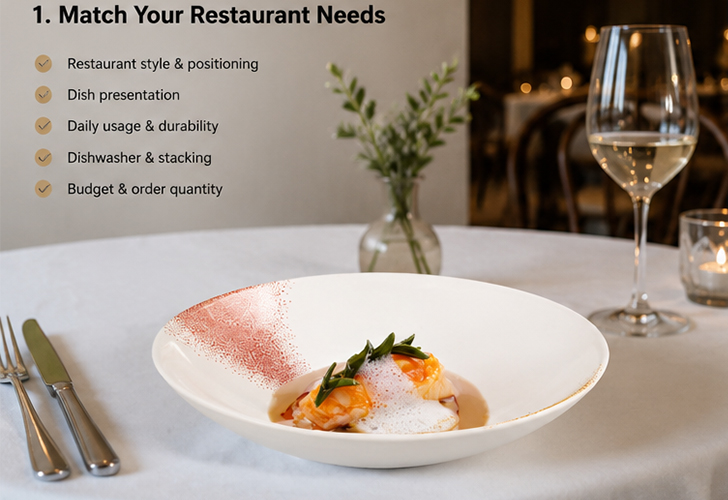
Before contacting suppliers, define what your restaurant actually needs.
Consider:
- Restaurant type and positioning
- Menu and serving style
- Number of seats
- Daily or weekly turnover
- Dishwasher usage
- Required dinnerware sizes
- Target purchasing budget
- Storage capacity
- Expected order quantity
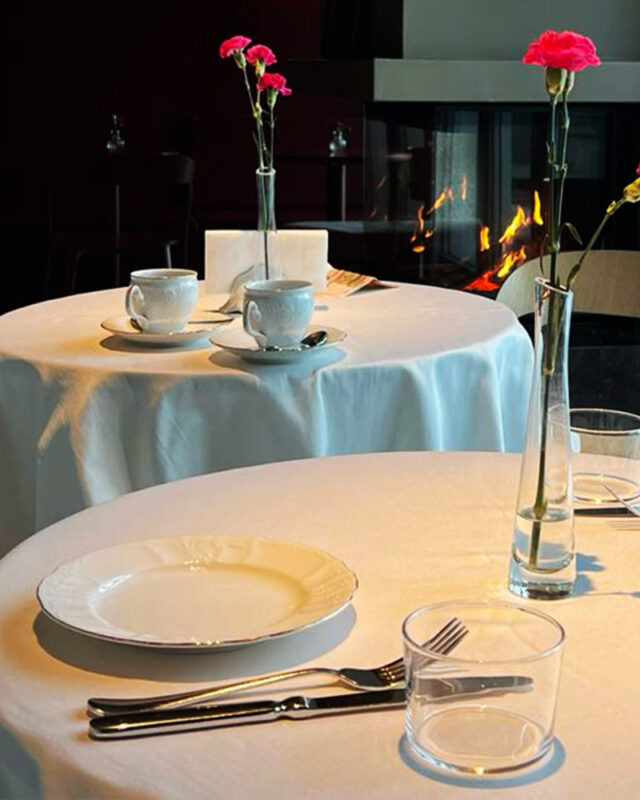
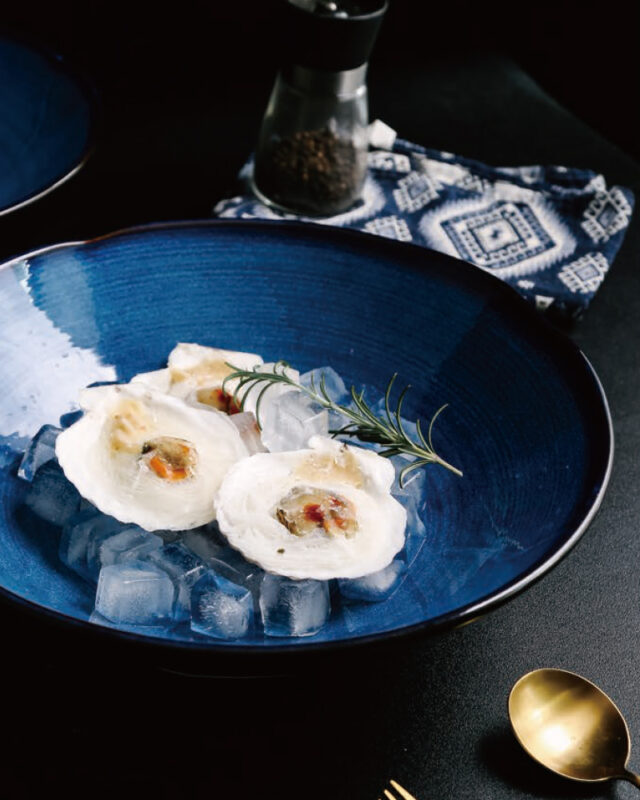
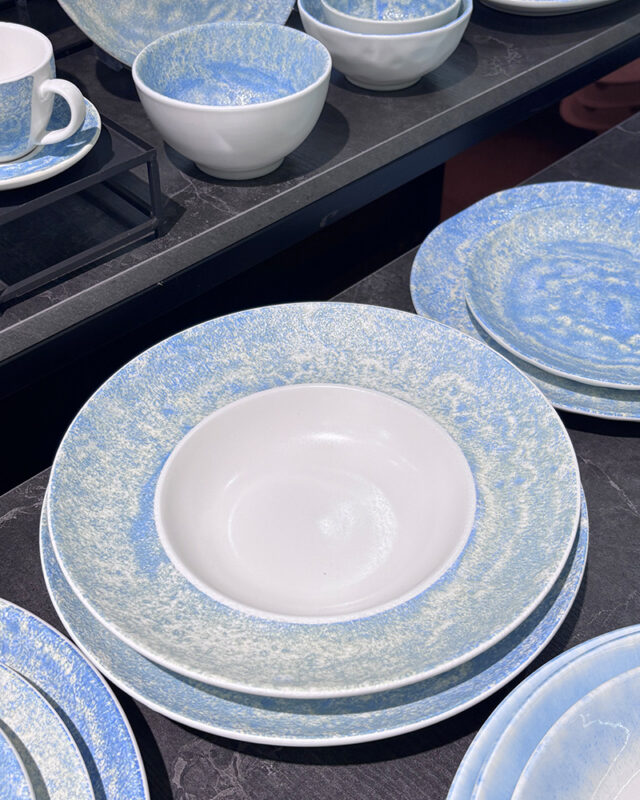
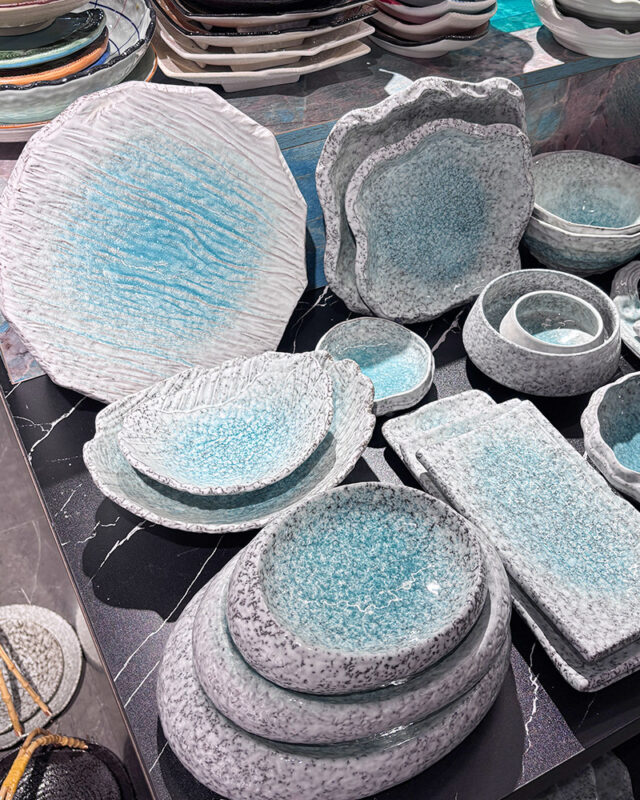
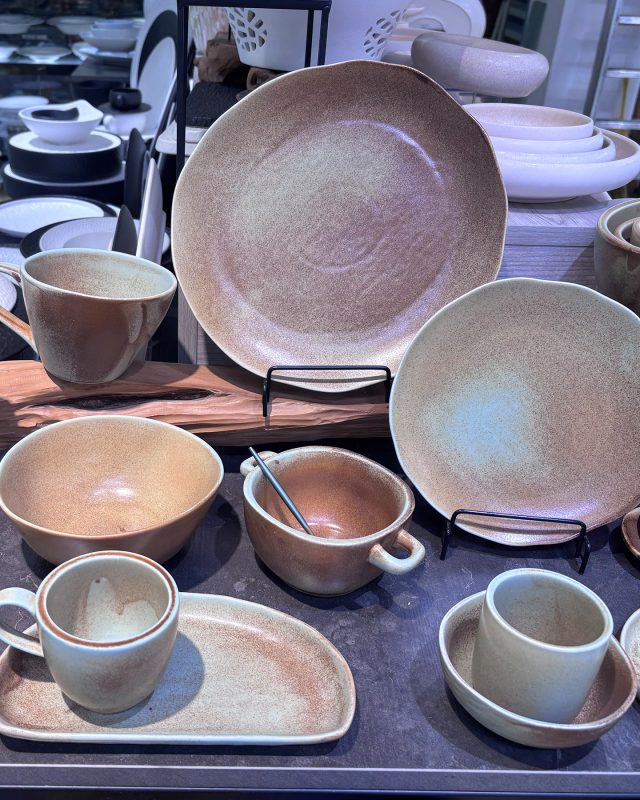
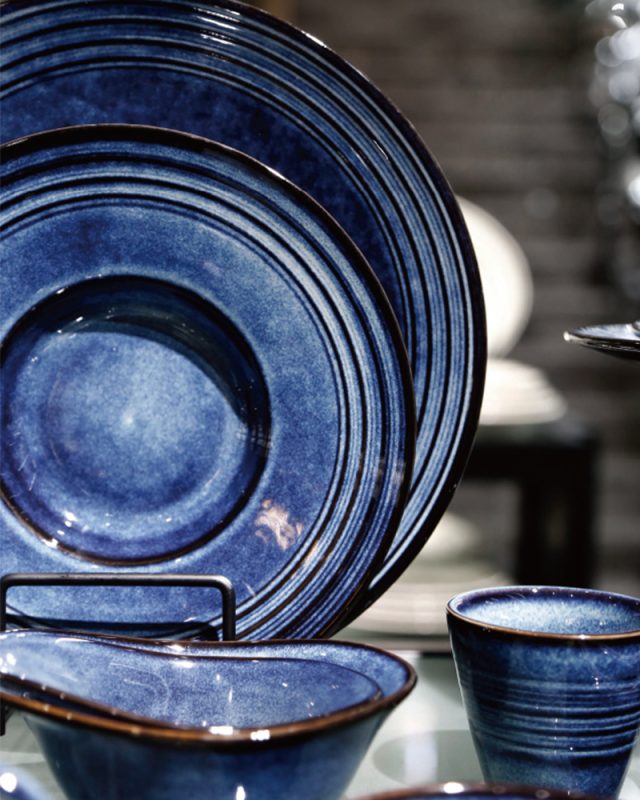
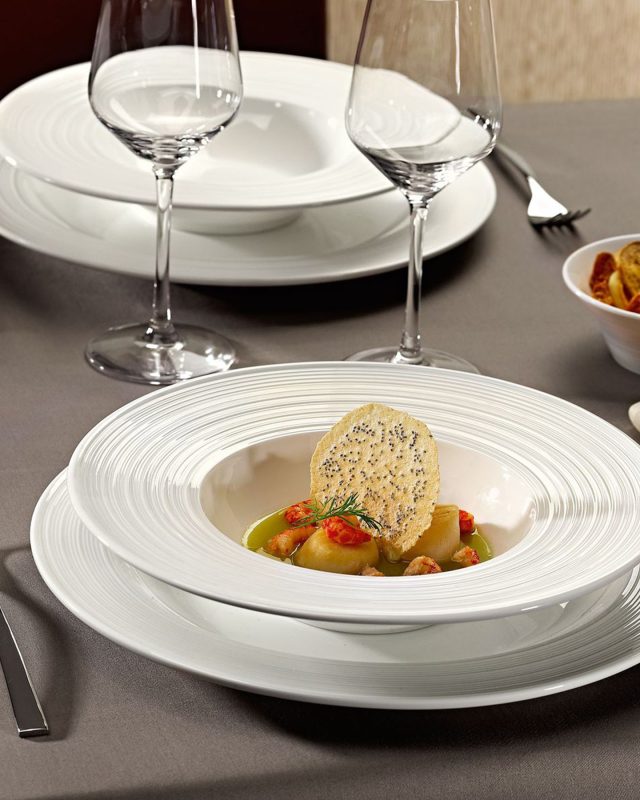
A fine dining restaurant may prioritize elegant porcelain or bone china, while a casual restaurant may prefer durable stoneware with distinctive reactive glaze finishes.
The right supplier should be able to recommend suitable products based on your actual application rather than simply selling you the products they already have.
2. Check the Dinnerware Materials
Material is one of the first things you should evaluate.
Porcelain
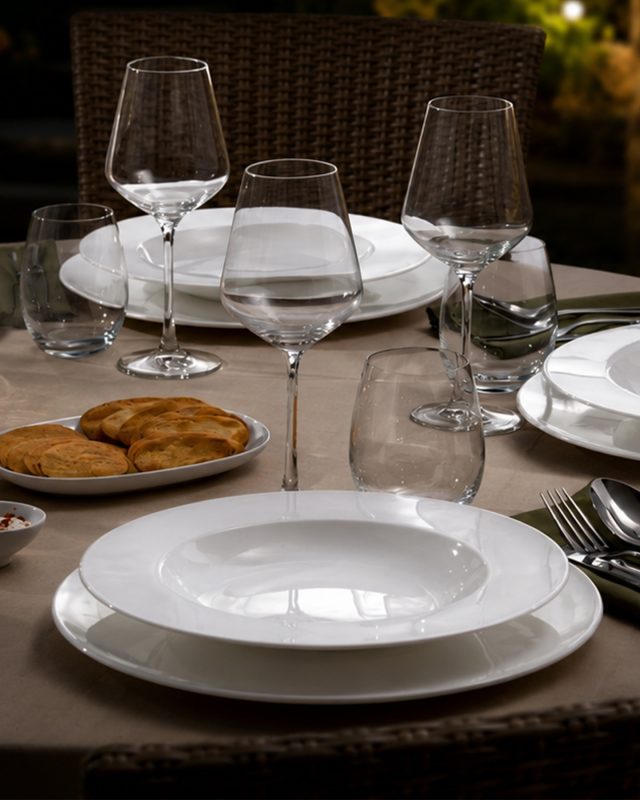
Porcelain offers a clean, professional appearance and is widely used in restaurants, hotels, catering, and hospitality environments.
It works particularly well for modern and classic table settings.
Stoneware
Stoneware is popular for casual dining, cafés, bistros, and contemporary restaurants.
It offers a more natural appearance and is available in a wide range of glaze colors and finishes.
Bone China
Bone china is known for its refined appearance, lightweight feel, and elegant presentation.
It is often considered for premium restaurants, hotels, and fine dining applications.
The best material depends on your restaurant concept, usage frequency, design requirements, and budget.
3. Evaluate Commercial Durability
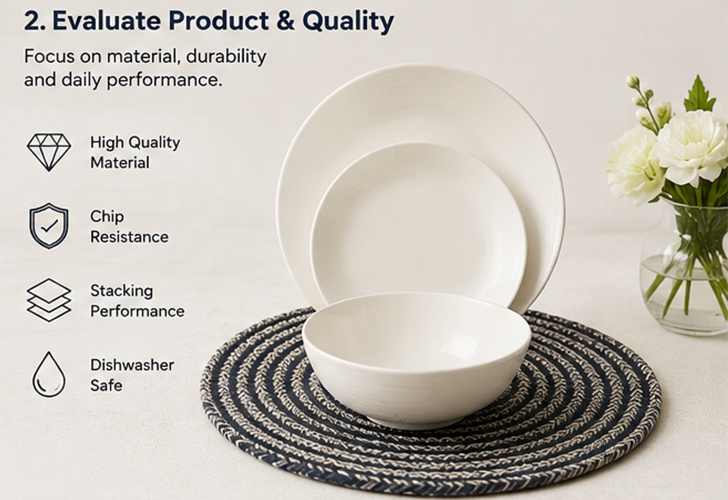
Restaurant dinnerware is used much more frequently than household dinnerware.
Before ordering, ask the supplier about:
- Chip resistance
- Glaze durability
- Product thickness
- Weight
- Stacking performance
- Dishwasher suitability
- Edge strength
- Quality consistency
A low-priced plate may not actually be economical if it breaks frequently.
For commercial buyers, it is better to evaluate total cost of ownership rather than simply comparing the initial unit price.
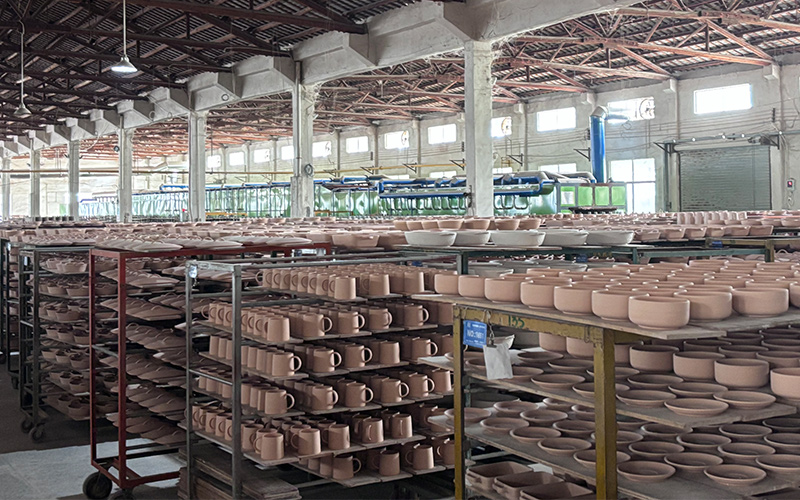
A reliable supplier should also be able to explain how its products are designed and produced for repeated commercial use.
4. Compare More Than the Unit Price
When you request quotations from different suppliers, don’t compare only the product price.
Your total purchasing cost may include:
Product + Packaging + Customization + Mold Cost + Inspection + Shipping
Pricing can vary depending on:
- Material
- Product size
- Shape
- Glaze
- Decoration
- Logo printing
- Order quantity
- Packaging requirements
- Custom development
For example, a custom reactive glaze plate with a restaurant logo will naturally have a different cost structure from a standard white porcelain plate.
A supplier offering the lowest unit price is not necessarily offering the lowest overall purchasing cost.
5. Understand MOQ Before Ordering
MOQ means Minimum Order Quantity.
This is particularly important for restaurant buyers because MOQ may be calculated differently depending on the supplier.
Ask:
- Is MOQ calculated per product?
- Does each size have a separate MOQ?
- Does each color have a separate MOQ?
- Can different products be combined?
- What is the MOQ for logo customization?
- What is the MOQ for custom packaging?
For a new restaurant testing a concept, standard products with simple logo customization may be more practical.
For restaurant groups or established brands with larger purchasing volumes, OEM or ODM development may provide more opportunities for customization.
6. Check OEM and Customization Capabilities
If branding is important to your restaurant, check whether the supplier can provide genuine OEM or ODM services.
Possible customization options include:
- Restaurant logo
- Custom colors
- Custom glaze
- Decals
- Embossed designs
- Special shapes
- Custom packaging
- Private label solutions
However, customization should not be evaluated only by looking at a supplier’s website.
Ask for actual samples and confirm:
Design → Sample → Approval → Production → Quality Control
A professional supplier should have a clear process for moving from an idea to finished dinnerware.
7. Request Samples Before Bulk Ordering
This is one of the most important steps in restaurant dinnerware purchasing.
Product photos cannot fully show:
- Actual weight
- Thickness
- Glaze texture
- Color
- Shape
- Edge finishing
- Logo quality
- Packaging protection
For standard products, samples allow you to evaluate the actual product.
For OEM dinnerware, the approved sample can also become an important reference for future mass production.
Before placing a large order, make sure the sample meets your restaurant’s expectations.
8. Evaluate Quality Control
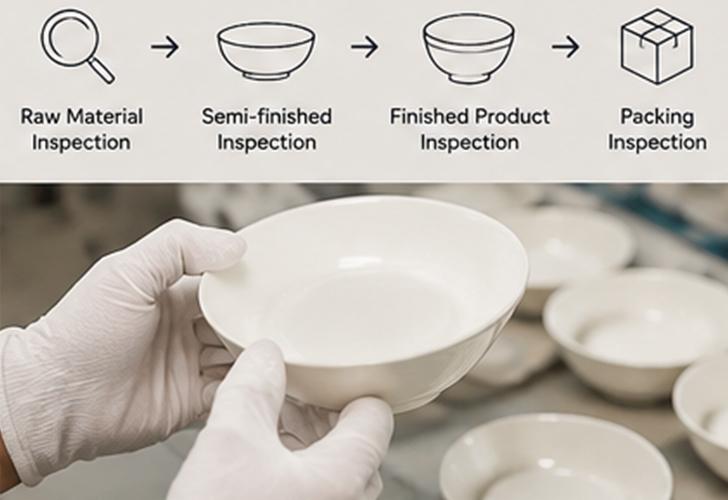
A reliable dinnerware supplier should have a clear quality control process.
Ask how the supplier checks:
Raw Materials
Are ceramic materials and glaze materials inspected before production?
Semi-Finished Products
Are shape, size, and surface defects checked during production?
Finished Products
Are products inspected after firing?
Packaging
Are products properly protected before shipment?
For large B2B orders, consistent quality across the entire shipment is just as important as the quality of a single sample.
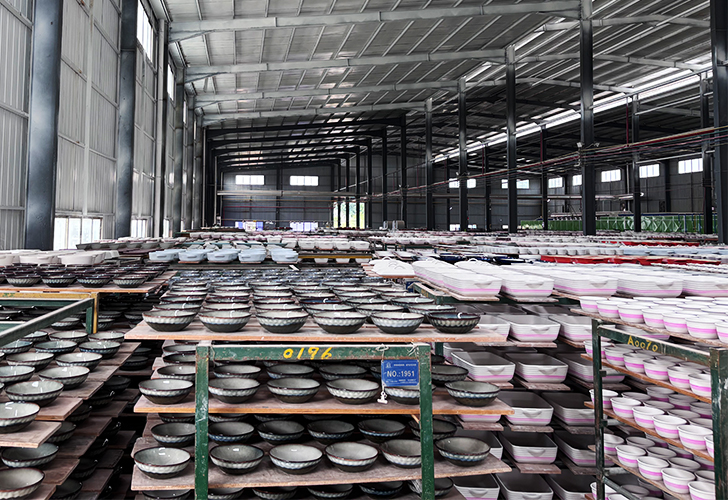
9. Check Production Capacity and Lead Time
A supplier may be able to produce your first order but struggle when you need to reorder.
This is why restaurant buyers should ask about:
- Production capacity
- Standard lead time
- OEM lead time
- Peak-season production
- Sample lead time
- Repeat-order lead time
- Emergency replenishment options
This becomes particularly important for restaurant groups with multiple locations.
A good supplier should be able to support not only your initial purchase but also your future replenishment needs.
10. Don’t Ignore Packaging and Shipping
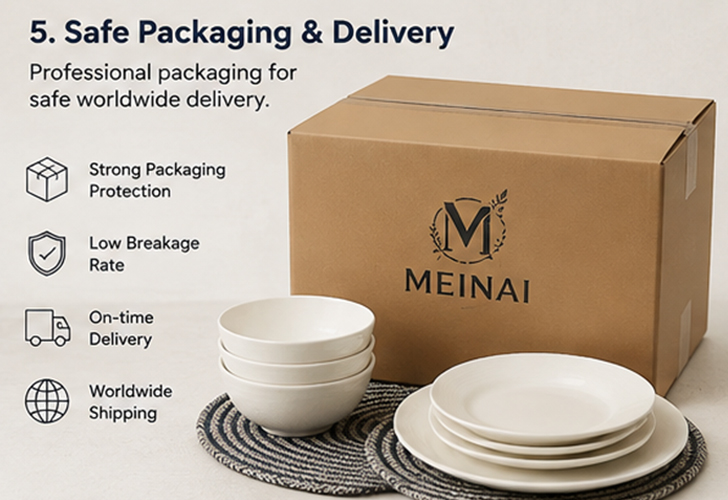
Ceramic dinnerware is fragile and relatively heavy.
Packaging quality therefore has a direct impact on your final purchasing cost.
Ask suppliers about:
- Individual protection
- Carton strength
- Inner packaging
- Palletization
- Container loading
- Export packaging
- Breakage protection
For international buyers, a professional export packaging system can help reduce transportation damage and unexpected replacement costs.
11. Look for a Long-Term Supplier, Not Just a Cheap Supplier
The best restaurant dinnerware supplier should be able to provide more than competitive pricing.
Look for a partner that can offer:
Stable Quality + Reliable Lead Time + Flexible Customization + Consistent Reordering + Professional Communication
This is especially important when your restaurant plans to expand.
Imagine opening three more locations and discovering that your original dinnerware supplier can no longer produce the same shape or glaze.
That can create unnecessary purchasing and branding problems.
Before placing the first order, always ask:
Can this supplier support my business two or three years from now?
Restaurant Dinnerware Supplier Checklist
Before making your final decision, check:
Suitable material
Commercial durability
Product specifications
Competitive quotation
Reasonable MOQ
Sample available
OEM/ODM capability
Quality control process
Production capacity
Reliable lead time
Export packaging
Shipping experience
Repeat-order capability
Professional communication
The supplier that meets the most important requirements—not simply the supplier with the lowest price—is usually the better long-term choice.
FAQ
What should I look for in a restaurant dinnerware supplier?
Focus on product quality, commercial durability, pricing, MOQ, customization, quality control, production capacity, packaging, lead time, and repeat-order capability.
What is the best dinnerware material for restaurants?
There is no single best material for every restaurant. Porcelain is widely used for professional hospitality settings, while stoneware is popular for casual and contemporary restaurants. Bone china is more suitable for premium applications.
Should I request samples before placing a bulk order?
Yes. Samples allow you to check the actual product quality, size, weight, glaze, color, and finish before committing to a large order.
What MOQ should I expect when buying restaurant dinnerware?
MOQ varies by supplier, product, material, customization, and packaging requirements. Always confirm whether MOQ applies per product, size, color, or design.
Can I customize dinnerware with my restaurant logo?
Yes. Depending on the supplier, options may include logo printing, decals, custom colors, embossed designs, custom shapes, and private-label packaging.
How can I compare two dinnerware suppliers?
Don’t compare unit prices alone. Compare the complete purchasing package, including quality, MOQ, customization, packaging, lead time, shipping, and long-term replenishment capability.
Start Your Restaurant Dinnerware Project
Finding the right supplier is the first step toward building a reliable dinnerware supply chain.
Whether you need standard porcelain dinnerware, stoneware collections, reactive glaze dinnerware, custom logo plates, OEM dinnerware, or private-label solutions, the purchasing process should start with clear product requirements and sample evaluation.
Request Sample → Get Quote → Contact Meinai
Request Sample
Evaluate product quality, size, glaze, shape, and finishing before bulk ordering.
Get Quote
Send your required products, specifications, estimated quantity, and customization requirements for a detailed quotation.
Contact Meinai
Discuss your restaurant dinnerware project with Meinai Tableware and explore ceramic dinnerware, OEM/ODM, custom logo, and wholesale solutions.