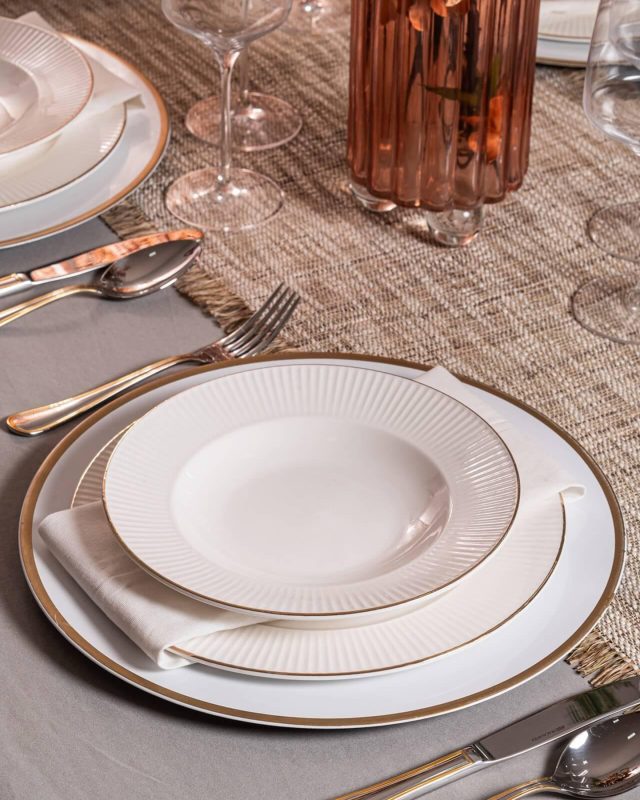





How to Choose Restaurant Dinnerware: A Complete Buying Guide for Restaurants

Choosing restaurant dinnerware is not simply about finding plates and bowls that look attractive. For restaurants, cafés, hotels, and catering businesses, dinnerware directly affects food presentation, durability, operating costs, storage, and the overall dining experience.
The right dinnerware should match your restaurant concept, menu, service volume, budget, and brand identity while remaining practical for daily commercial use.
This restaurant dinnerware buying guide explains what buyers should consider before ordering ceramic dinnerware in bulk—from material and size to MOQ, pricing, customization, quality control, and supplier selection.
1. Start With Your Restaurant Type
Before choosing a specific plate or bowl, define how the dinnerware will be used.
| Restaurant Type | Recommended Material | Typical Style | Main Priority |
|---|---|---|---|
| Fine Dining | Porcelain / Bone China | Elegant, minimal | Presentation |
| Casual Dining | Stoneware / Porcelain | Modern, natural | Durability |
| Café | Stoneware / Porcelain | Simple, versatile | Flexibility |
| Hotel Restaurant | Porcelain | Classic, professional | Durability + Supply |
| Fast Casual | Porcelain / Stoneware | Practical | Cost + Durability |
| Catering | Porcelain / Stoneware | Stackable | Durability + Handling |
This first decision helps narrow down the right material, product shapes, and price range.
2. Choose the Right Dinnerware Material
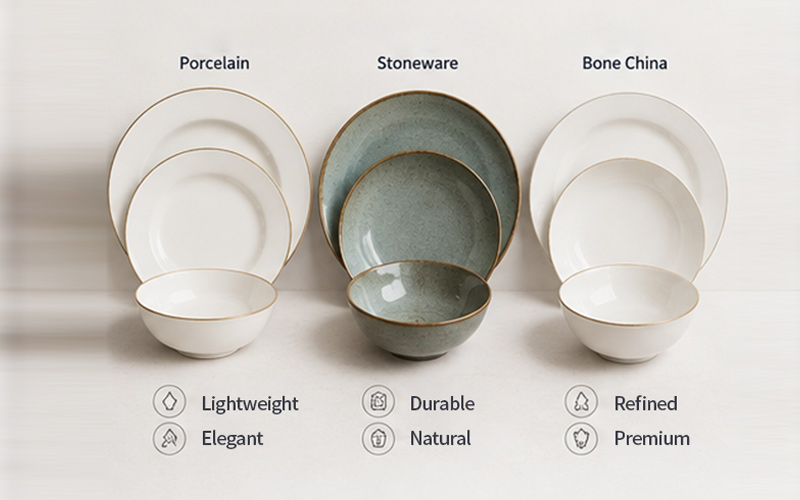
Stoneware
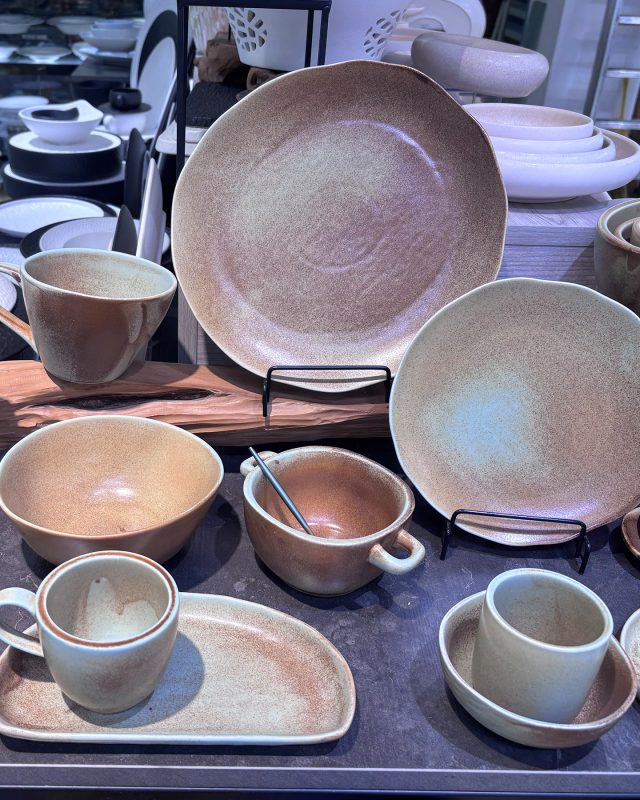
Stoneware is popular among casual restaurants, cafés, bistros, and modern dining concepts.
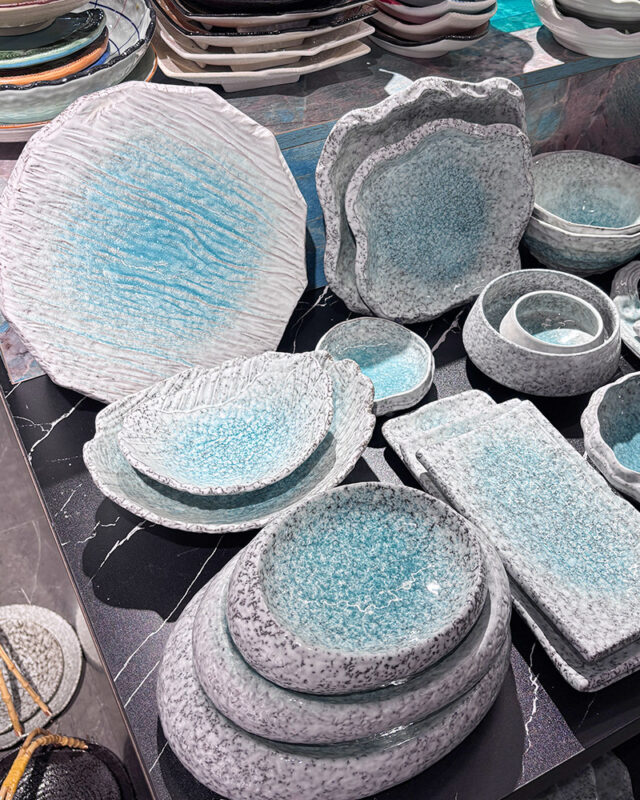
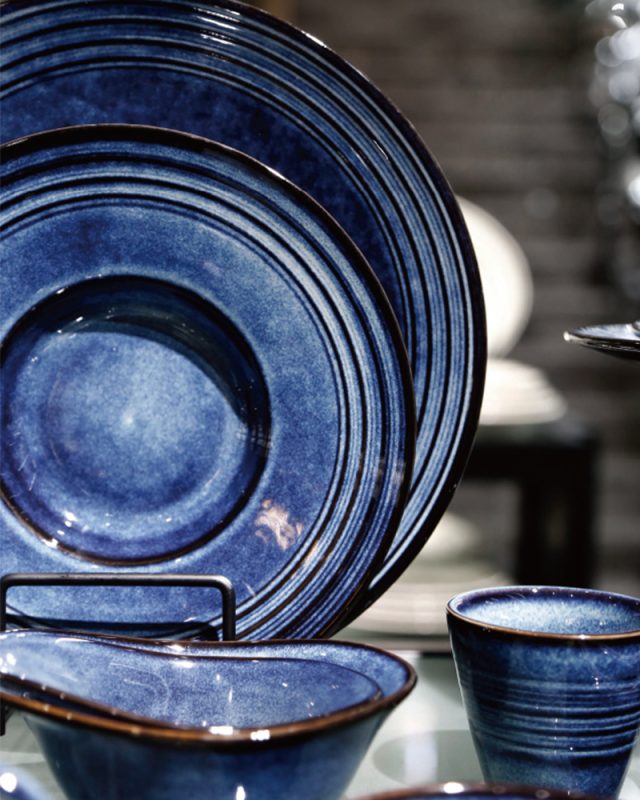
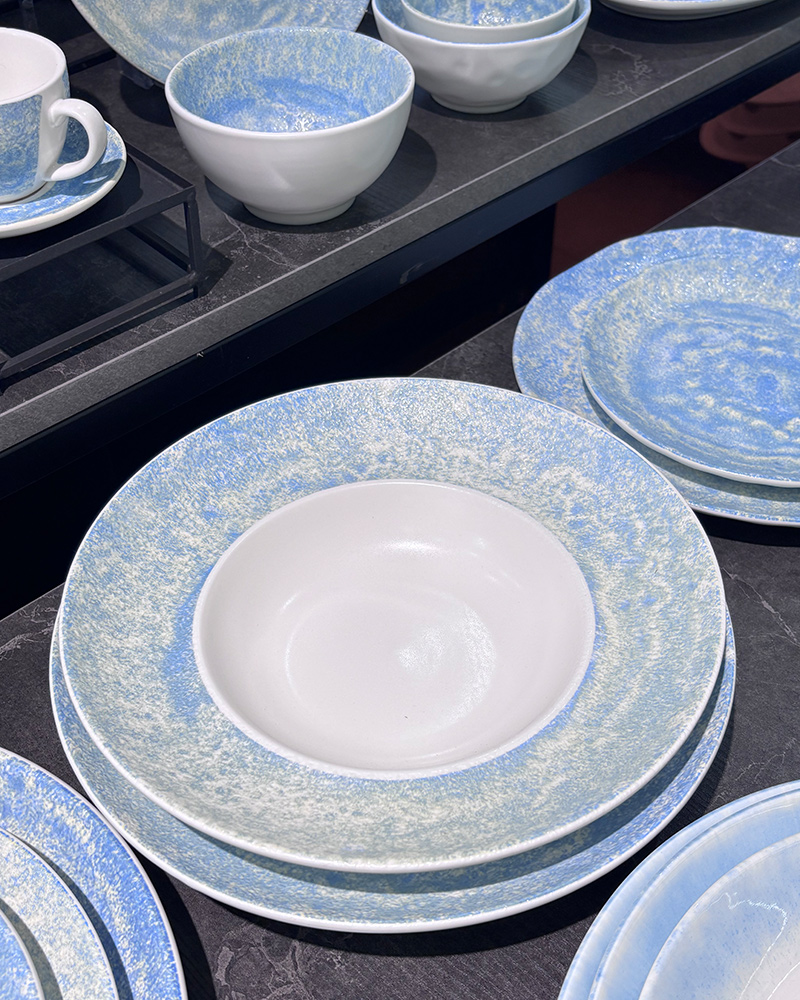
It offers a natural appearance, strong durability, and many glaze options, including reactive glaze finishes.
Best for: casual dining, cafés, modern restaurants, and rustic concepts.
Porcelain
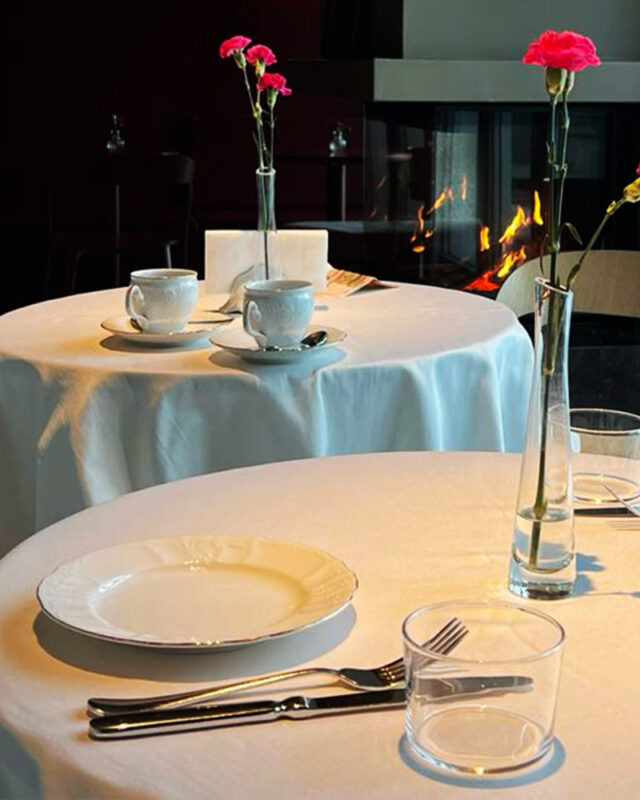
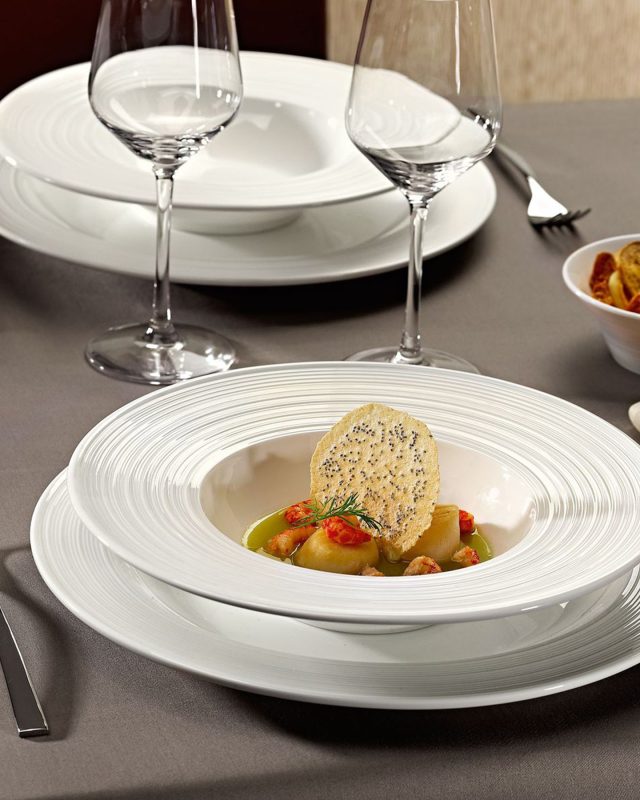
Porcelain provides a clean, professional appearance and is widely used by restaurants, hotels, and catering businesses.
Its relatively refined appearance makes it suitable for professional food presentation.
Best for: hotels, fine dining, banquet services, and professional restaurants.
Bone China
Bone china is known for its refined appearance, translucency, and lightweight feel.
It is generally positioned toward premium dining environments where table presentation is particularly important.
Best for: luxury restaurants, hotels, and fine dining.
Quick Decision
If durability and natural design are your priorities, consider stoneware.
If you want a professional and versatile restaurant collection, porcelain is often a strong choice.
If premium presentation is the priority, bone china may be worth considering.
3. Choose the Right Plates and Bowls
A restaurant does not necessarily need dozens of different dinnerware SKUs.
Start with the core products required by your menu:
- Dinner plates
- Side plates
- Salad plates
- Pasta bowls
- Soup bowls
- Dessert plates
- Serving platters
- Cups and saucers
Consider the actual food served on each item.
For example:
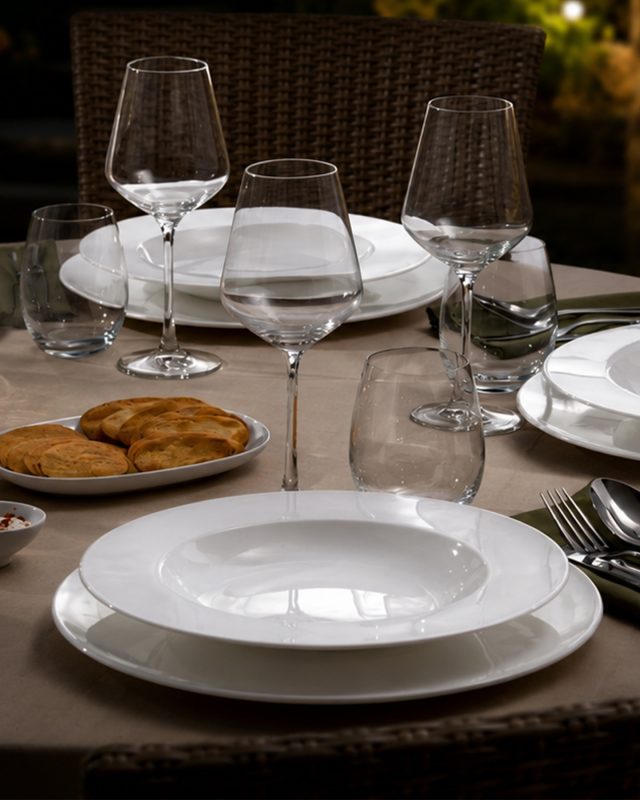
Large coupe plates can work well for main courses and modern plating.
Deep bowls are suitable for soups, pasta, rice dishes, and dishes with sauces.
Small plates are useful for appetizers, desserts, bread, and side dishes.
The goal should be to create a functional collection rather than an oversized collection.
Fewer, more versatile SKUs can simplify purchasing, storage, and replenishment.
4. How Many Dinnerware Pieces Should a Restaurant Buy?
One of the most important purchasing questions is quantity.
A simple way to estimate your starting requirement is:
Required Quantity = Seats × Peak Table Turns + Replacement Buffer
For example, a restaurant with 100 seats and approximately 2 table turns during peak service may need at least 200 pieces of its core dinner plates, plus additional inventory for washing cycles, breakage, and unexpected demand.
A replacement buffer of approximately 15–20% can be considered depending on the restaurant’s operating conditions.
However, the exact quantity depends on:
- Seating capacity
- Table turnover
- Washing frequency
- Storage capacity
- Menu requirements
- Breakage rate
- Delivery schedule
- Replacement lead time
For large restaurant groups, also consider future expansion and repeat orders when selecting a supplier.
5. Consider Durability for Commercial Use
Restaurant dinnerware is exposed to much heavier use than household tableware.
Before purchasing, ask about:
- Commercial dishwasher use
- Chip resistance
- Glaze durability
- Product thickness
- Stacking performance
- Weight
- Edge strength
- Replacement availability
A low-cost plate that breaks frequently may ultimately cost more than a higher-quality product.
Therefore, restaurant buyers should evaluate total operating cost, not only the initial purchase price.
6. Understand Restaurant Dinnerware Pricing
Wholesale dinnerware pricing depends on several factors.
| Cost Factor | What Buyers Should Consider |
|---|---|
| Material | Stoneware, porcelain, bone china, etc. |
| Size | Larger products generally use more material |
| Shape | Complex shapes may require additional tooling |
| Glaze | Special and reactive glazes can increase cost |
| Decoration | Logo, printing, decals, and patterns |
| Quantity | Larger orders may achieve better unit pricing |
| Packaging | Standard or customized packaging |
| Shipping | Weight and carton dimensions affect freight cost |
When comparing suppliers, don’t compare only the unit price.
Your actual purchasing cost may also include:
Product + Packaging + Tooling + Shipping + Inspection + Replacement Cost
This is why the cheapest quotation is not always the most economical option.
7. Check MOQ Before Ordering
MOQ means Minimum Order Quantity.
Restaurant buyers should confirm exactly how the supplier calculates MOQ.
Ask:
- Is MOQ calculated per product?
- Is MOQ calculated per size?
- Does each color have a separate MOQ?
- Can different products be combined?
- What is the MOQ for logo printing?
- What is the MOQ for custom packaging?
If you are a new restaurant testing a new concept, an existing product with simple customization may provide greater flexibility.
For restaurant groups or large-volume buyers, developing custom OEM dinnerware may become more attractive because tooling and development costs can be spread across a larger order.
8. Should Restaurants Choose Standard or Custom Dinnerware?
There are two main approaches.
Standard Dinnerware
Best when you need:
- Faster sourcing
- Lower development costs
- Smaller initial orders
- Easy replacement
- Proven product designs
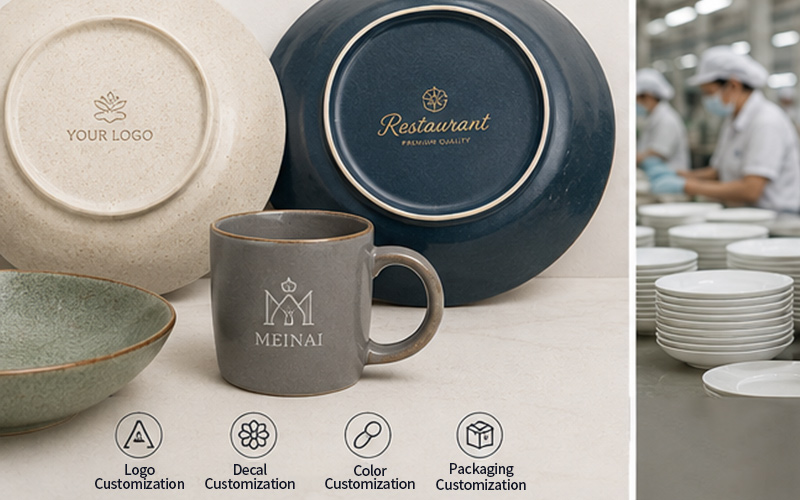
Custom OEM Dinnerware
Best when you need:
- Unique shapes
- Custom colors
- Restaurant logos
- Special glaze
- Embossed designs
- Private label packaging
- A distinctive brand identity
Custom dinnerware can create a stronger brand experience, but buyers should confirm MOQ, tooling cost, sample cost, production lead time, and repeat-order capability before starting the project.
9. How to Choose a Restaurant Dinnerware Supplier
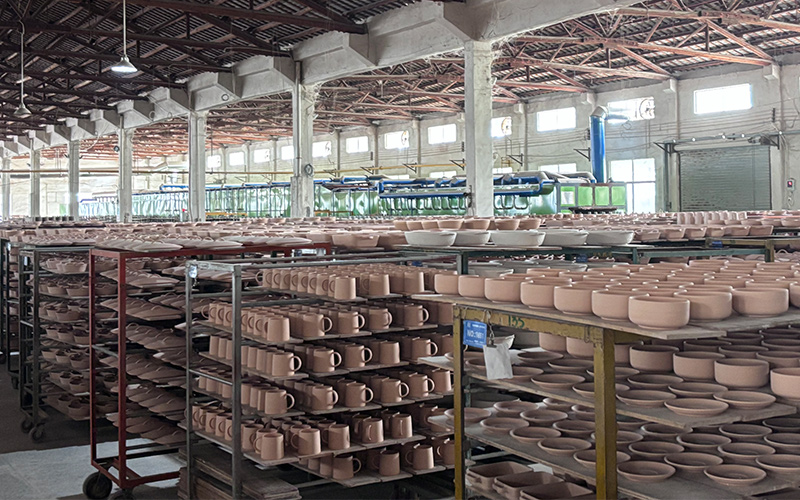
Supplier selection is one of the most important purchasing decisions.
Before ordering, evaluate five areas.
1. Manufacturing Capability
Can the factory produce your required material, size, shape, glaze, and decoration?
2. Quality Consistency
Can the supplier maintain consistent color, dimensions, glaze, and logo quality across production batches?
3. OEM Capability
Does the manufacturer have experience developing custom restaurant dinnerware?
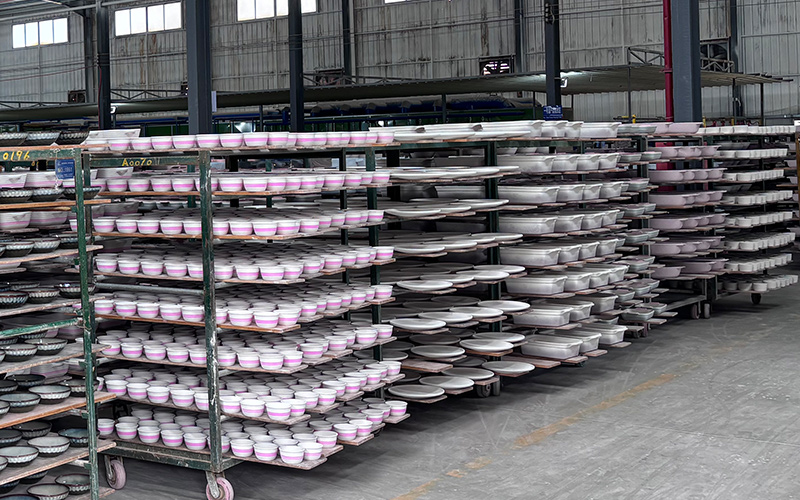
4. Production Capacity
Can the supplier support both your first order and future replenishment?
5. Packaging & Export Experience
Does the supplier understand how to protect ceramic products during international transportation?
For long-term B2B purchasing, stable quality and reliable replenishment are often more important than the lowest initial price.

10. Request a Sample Before Bulk Ordering
Never rely only on product photos when purchasing customized or large-volume dinnerware.
Before placing a bulk order, inspect the actual sample for:
- Size
- Weight
- Shape
- Color
- Glaze
- Surface finish
- Logo
- Edge quality
- Packaging
For OEM projects, the approved sample should become the reference standard for mass production.
This can significantly reduce the risk of receiving a large shipment that does not match your expectations.
11. 7 Common Restaurant Dinnerware Buying Mistakes
1. Choosing appearance over durability
A beautiful plate is not useful if it breaks frequently.
2. Buying too many SKUs
Too many shapes and sizes can increase inventory and storage costs.
3. Comparing suppliers only by unit price
Always consider total purchasing and operating costs.
4. Ignoring MOQ per SKU
A supplier’s overall MOQ may look attractive until you discover that every color or size has a separate MOQ.
5. Skipping the sample
Photos cannot fully show weight, glaze, texture, or actual product quality.
6. Forgetting future replenishment
Make sure the supplier can reproduce and supply the same products later.
7. Not confirming packaging
Poor packaging can increase breakage and unexpected costs during shipping.
Restaurant Dinnerware Buyer Checklist
Before placing your order, confirm:
- Restaurant type and menu
- Material
- Plate and bowl sizes
- Product quantities
- Durability requirements
- MOQ
- Wholesale pricing
- Sample approval
- Logo/customization
- Packaging
- Production lead time
- Quality inspection
- Shipping terms
- Future replenishment
If all of these points are confirmed, you are much better prepared to make a reliable purchasing decision.
FAQ: Restaurant Dinnerware Buying
What is the best dinnerware material for restaurants?
There is no single best material. Stoneware is suitable for many casual and modern restaurants, porcelain is versatile for professional foodservice, and bone china is often chosen for premium dining.
How much dinnerware does a restaurant need?
The quantity depends on seating capacity, table turnover, washing cycles, breakage, and backup inventory. Buyers should calculate demand based on peak service rather than average daily use.
Is porcelain or stoneware better for restaurants?
It depends on the restaurant concept. Porcelain offers a clean and professional appearance, while stoneware provides a more natural style and is popular for casual dining.
Should a restaurant buy custom dinnerware?
Custom dinnerware is worthwhile when brand identity and unique design are important. For new restaurants or smaller orders, standard products with simple logo customization may be more practical.
Should I request samples before placing a bulk order?
Yes. Sampling allows you to check the actual product before committing to a large order and is especially important for custom dinnerware.
What should I ask a restaurant dinnerware supplier?
Ask about MOQ, pricing, samples, production lead time, material, quality control, packaging, OEM capability, and future replenishment.
Start Your Restaurant Dinnerware Project
Choosing restaurant dinnerware is ultimately about balancing:
Design + Durability + Cost + Functionality + Supply Stability
Whether you are opening a new restaurant, upgrading your current tableware, or sourcing dinnerware for multiple locations, choosing the right manufacturer can reduce purchasing risks and make long-term replenishment easier.
Request Sample → Get Quote → Contact Meinai
Request Sample
Get samples to evaluate product quality, size, glaze, shape, and finish.
Get Quote
Send your specifications and estimated quantity to receive a wholesale quotation.
Contact Meinai
Discuss restaurant dinnerware, OEM, ODM, custom logo, private label, and bulk ceramic dinnerware solutions with Meinai Tableware.