




Ceramic Dinnerware Wholesale Price: Cost Guide for Buyers

Wholesale ceramic dinnerware prices vary depending on material, product size, design, order quantity, glaze, customization, packaging, and shipping requirements. For importers, wholesalers, restaurants, hotels, and private-label brands, understanding these cost factors is essential before placing a bulk order.
If you are sourcing ceramic dinnerware wholesale from China, the factory unit price is only one part of the total purchasing cost. A lower quotation does not always mean a better deal. The right supplier should offer a balance of competitive pricing, consistent quality, reliable production, and flexible customization.
This guide explains the main factors affecting the ceramic dinnerware wholesale price and how B2B buyers can evaluate their total sourcing cost.
What Is the Wholesale Price of Ceramic Dinnerware?
There is no single fixed wholesale ceramic dinnerware price because every product specification can be different.
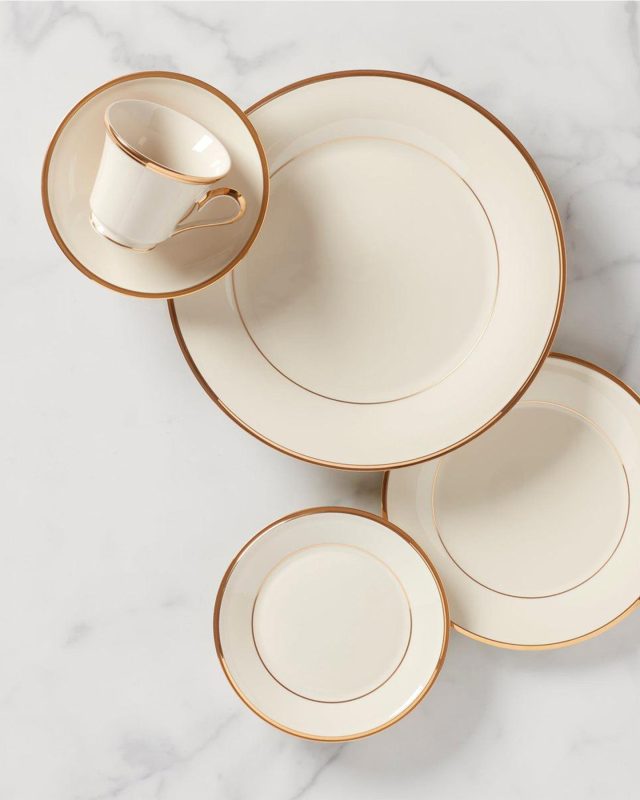
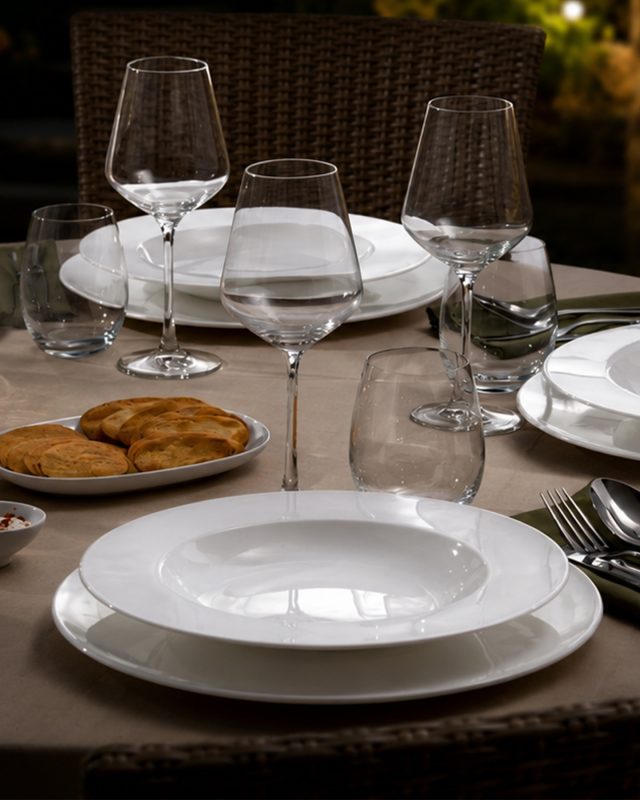
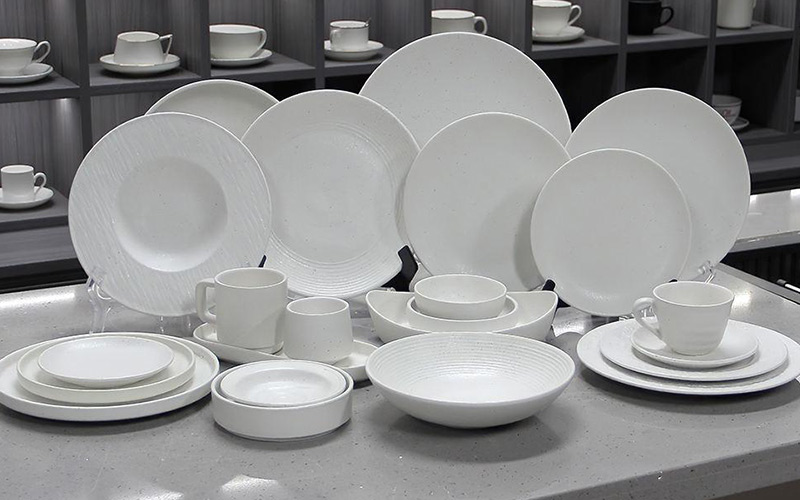
A simple white ceramic dinner plate produced in large quantities will normally have a different price from a reactive glaze plate, embossed bowl, or custom private-label dinnerware collection.
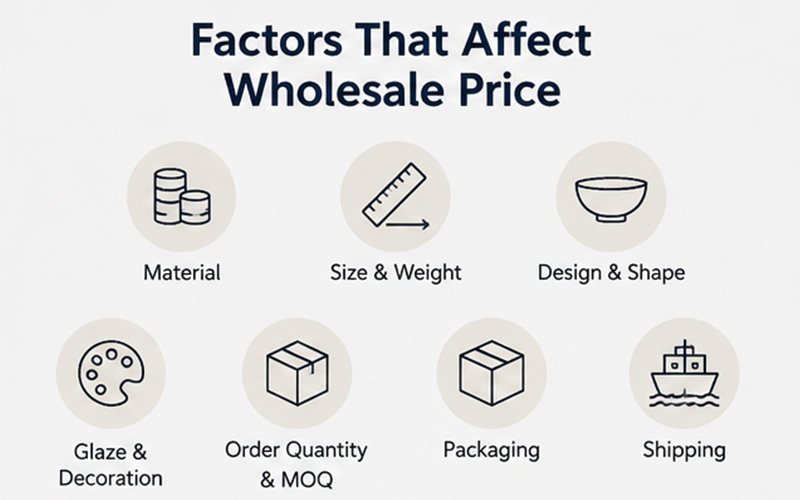
The main factors affecting ceramic dinnerware cost include:
- Ceramic material
- Product size and weight
- Shape and design
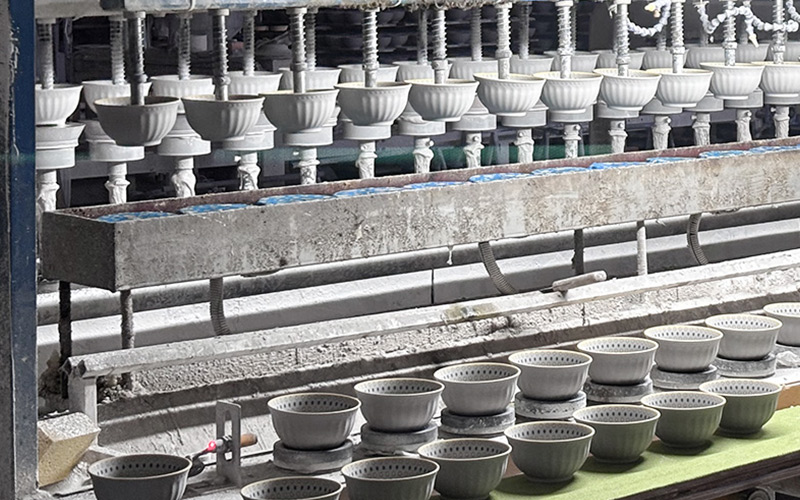
- Glaze and decoration
- Order quantity
- MOQ
- Custom logo or printing
- Packaging requirements
- Quality standards
- Shipping and delivery terms
For this reason, professional ceramic dinnerware suppliers normally provide quotations based on the buyer’s exact specifications rather than offering one universal price.
1. Material Is One of the Biggest Pricing Factors
The type of ceramic material directly affects production cost and product positioning.
Common materials include:
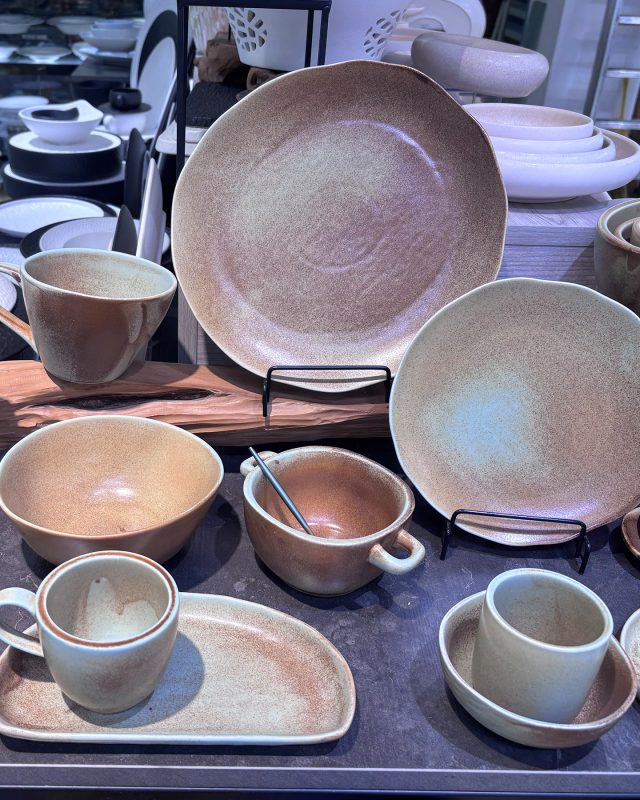
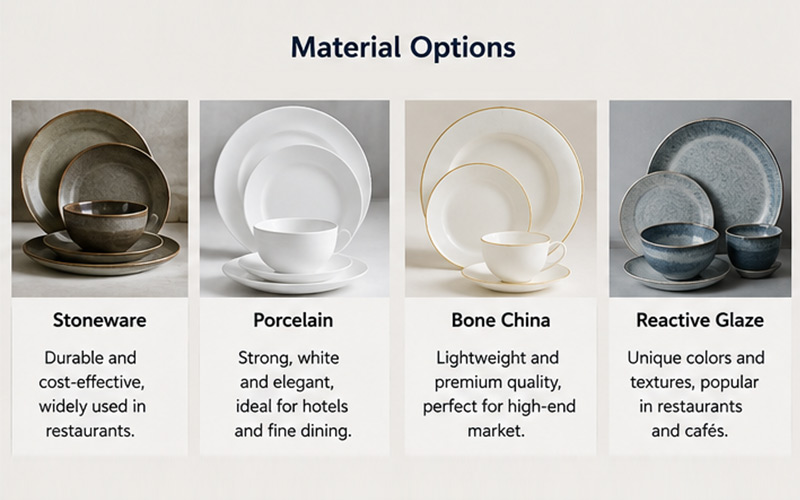
Stoneware
Stoneware is widely used by restaurants, cafés, casual dining businesses, and hospitality buyers. It offers a combination of durability, practical performance, and competitive production cost.
Porcelain
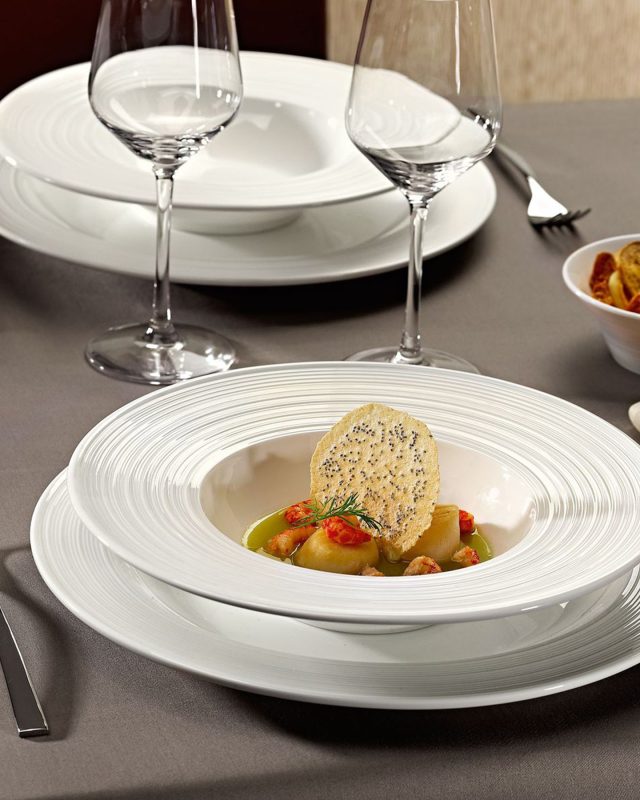
Porcelain is commonly selected by hotels, restaurants, catering businesses, and premium tableware buyers. It provides a clean appearance and professional presentation while offering good durability for commercial use.
Bone China
Bone China is generally positioned toward premium tableware applications. Its lighter weight, refined appearance, and manufacturing requirements can result in a higher price compared with standard ceramic products.
Reactive Glaze Dinnerware
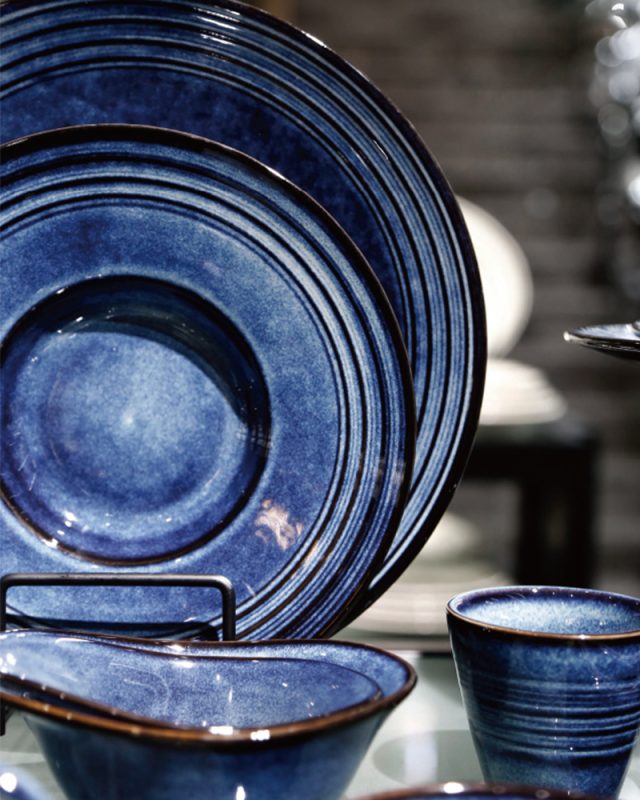
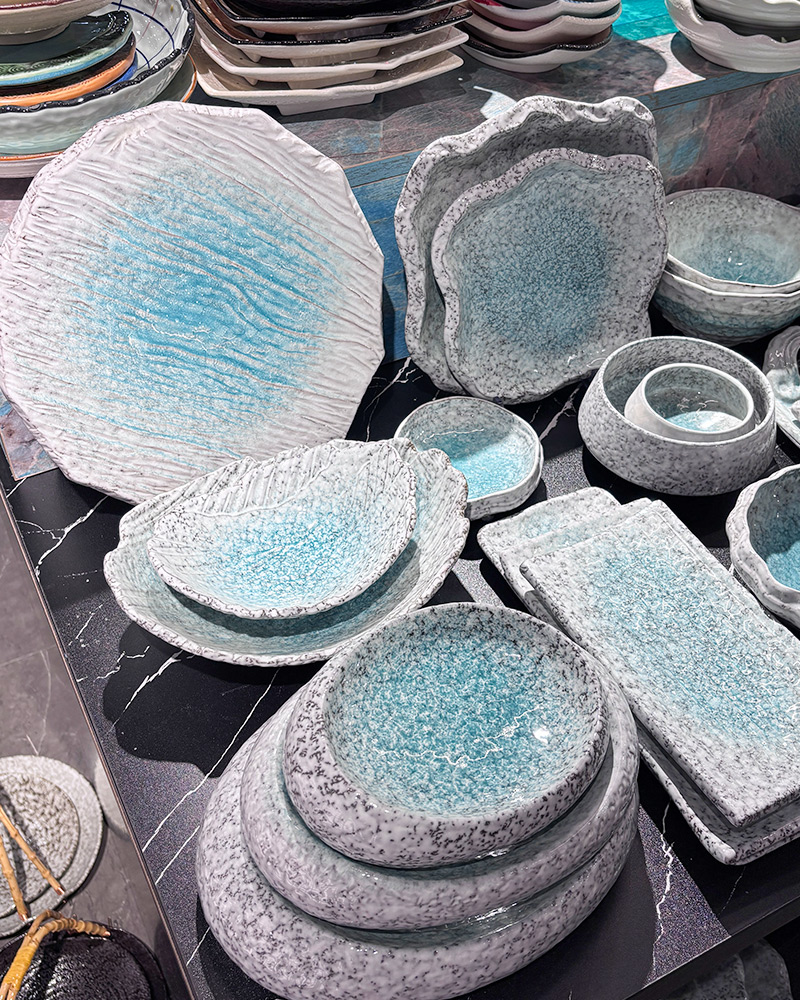
Reactive glaze products are popular among restaurants and hospitality brands looking for distinctive colors and handcrafted visual effects. However, the special glaze process can make the pricing different from standard glazed dinnerware.
When comparing wholesale ceramic dinnerware, buyers should compare products made from the same material and specification. Comparing a basic stoneware plate with a premium porcelain or reactive glaze plate will not provide a meaningful price comparison.
2. Product Size, Weight and Shape Affect Cost
The size and weight of ceramic dinnerware also influence the wholesale price.
A larger dinner plate generally requires more raw material, while heavier products can increase both production and transportation costs.
Shape complexity is another important factor.
A standard round plate is usually easier to manufacture than products featuring:
- Irregular shapes
- Special rims
- Embossed patterns
- Deep relief designs
- Multiple sections
- Complex curves
Custom molds may also require additional tooling costs.
For restaurants and hotels developing a new collection, it is therefore useful to work with an experienced ceramic dinnerware manufacturer during the design stage. Small changes in dimensions or structure can sometimes improve production efficiency without significantly changing the appearance of the final product.
3. Glaze and Decoration Can Change the Price
Glaze and surface decoration are another major part of ceramic dinnerware pricing.
A standard white glaze is generally simpler to produce than specialty finishes such as:
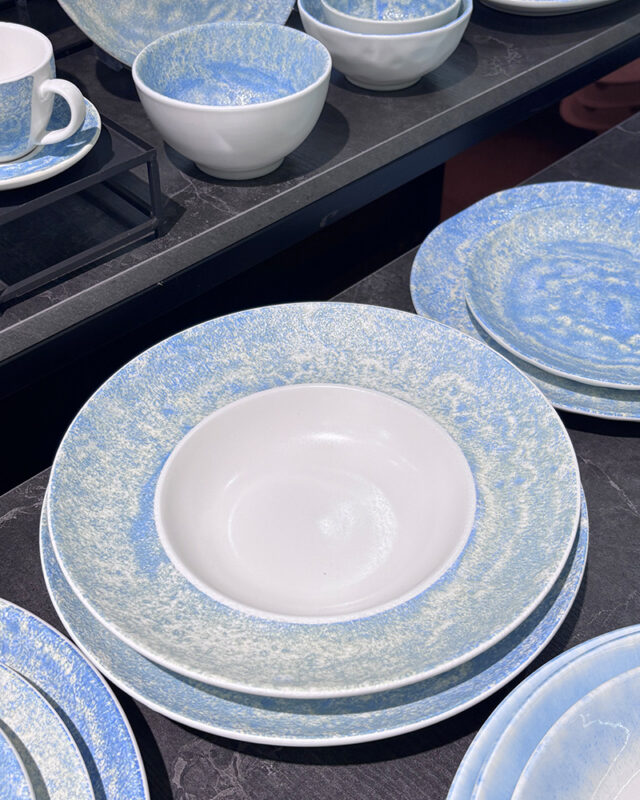
- Reactive glaze
- Matte glaze
- Colored glaze
- Two-tone glaze
- Hand-painted decoration
- Printed patterns
Custom decoration can also include:
- Restaurant logos
- Hotel logos
- Brand logos
- Custom colors
- Printed artwork
- Embossed branding
For private-label buyers, customization can create a unique collection and strengthen brand recognition, but it may also increase sampling, tooling, printing, and production costs.
When requesting a quotation for custom ceramic dinnerware, provide artwork, dimensions, colors, decoration requirements, and estimated order quantities whenever possible.
4. Order Quantity and MOQ Affect Wholesale Pricing
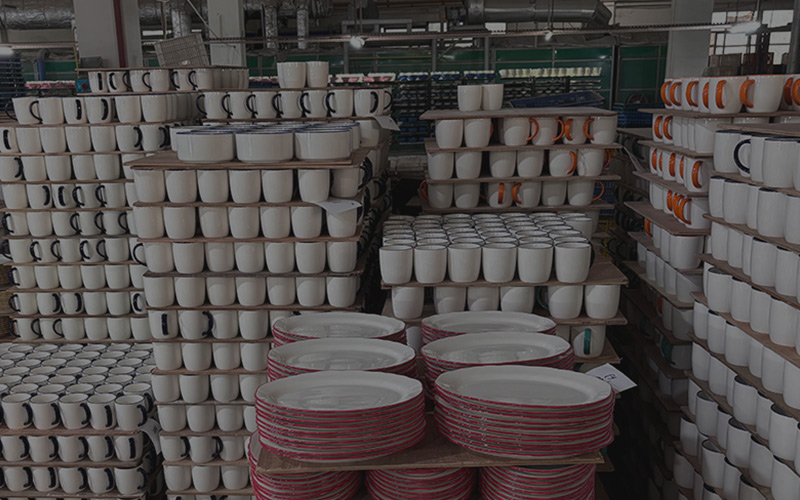
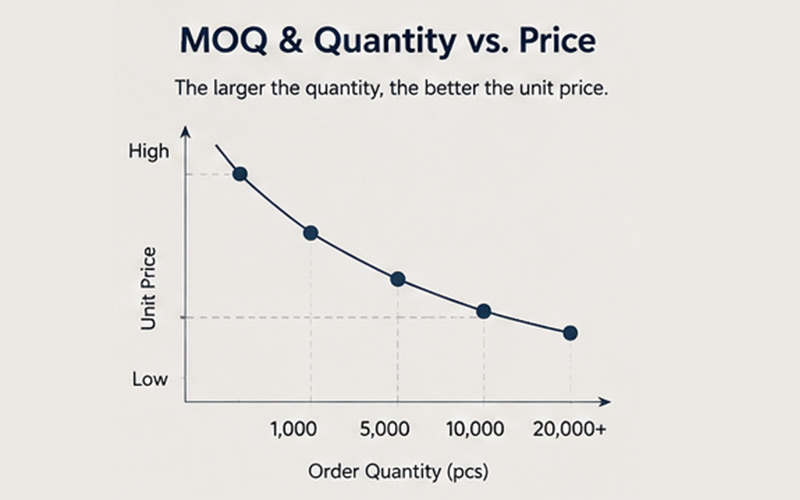
Order quantity has a significant impact on the ceramic dinnerware wholesale price.
Large-volume orders allow manufacturers to spread certain fixed costs across more products. These may include mold preparation, production setup, printing setup, and packaging.
As a result, the unit price may decrease when order quantities increase.
However, buyers should not automatically choose the supplier with the lowest MOQ or lowest unit price.
For example, a small MOQ can be useful for testing a new product, but the unit cost may be higher. A larger MOQ may offer better pricing but create additional inventory risk.
The right MOQ depends on:
- Expected sales volume
- Number of SKUs
- Warehouse capacity
- Product turnover
- Target market
- Available purchasing budget
For importers and wholesalers, finding the right balance between MOQ and unit cost is more important than simply pursuing the lowest possible price.
5. Custom Packaging Affects Total Cost
Packaging is another factor that buyers should consider when calculating the cost of bulk ceramic dinnerware.
Standard export packaging may be suitable for some wholesale orders, while hotels, restaurant chains, distributors, and private-label brands may require customized packaging.
Packaging options can include:
- Individual boxes
- Kraft boxes
- Color boxes
- Printed cartons
- Paper separators
- Foam protection
- Custom brand packaging
- Retail-ready packaging
Ceramic products are fragile, so packaging is not simply a branding expense. Proper packaging can reduce breakage during transportation and protect the buyer’s investment.
When comparing suppliers, always ask whether the quoted price includes standard export packaging and what packaging upgrades would cost.
6. Don’t Compare Suppliers by Unit Price Alone
One of the most common mistakes when buying wholesale ceramic dinnerware is comparing suppliers only according to factory price.
Consider two suppliers:
Supplier A
- Lower unit price
- Basic packaging
- Limited customization
- Less detailed quality control
Supplier B
- Slightly higher unit price
- Better export packaging
- OEM/ODM support
- Stable production quality
- More detailed quality inspection
Supplier B may actually provide a lower total sourcing cost if it results in fewer defects, less breakage, fewer replacement orders, and more consistent product quality.
When comparing a ceramic dinnerware supplier, evaluate:
- Product specifications
- Material quality
- MOQ
- Sample process
- Production lead time
- Packaging
- Quality control
- OEM/ODM capability
- Export experience
- Shipping terms
This provides a much more accurate comparison than looking at the factory unit price alone.
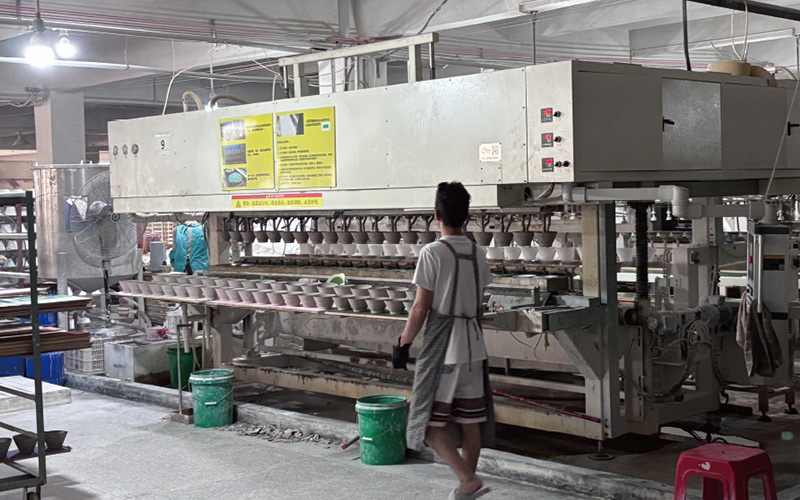
7. What Is the Total Cost of Importing Ceramic Dinnerware?
For international buyers, the factory price is not necessarily the final cost.
A basic landed-cost calculation can include:
Product Cost + Packaging + Inspection + Freight + Import Duties + Local Delivery
Depending on the purchasing agreement, some of these costs may already be included in the quotation.
Before placing an order, buyers should clarify the applicable Incoterms, such as EXW, FOB, CIF, or DDP, and confirm exactly what is included.
This is particularly important for importers purchasing ceramic dinnerware from China for markets such as the USA, Canada, UAE, Saudi Arabia, and other international markets.
A supplier offering the lowest FOB price may not necessarily provide the lowest landed cost.
8. How Much Does Custom Ceramic Dinnerware Cost?
Custom ceramic dinnerware generally costs more than standard products because additional development and production processes may be involved.
The final price can depend on:
- Custom shape
- New mold
- Custom glaze
- Logo printing
- Custom artwork
- Special colors
- Embossing
- Custom packaging
- Sampling requirements
- Order quantity
For a simple logo application, the additional cost may be relatively limited. More complex customization can require new tooling, multiple samples, or additional production steps.
If you are developing a private-label dinnerware collection, ask the supplier to separate the quotation into:
Product Price + Tooling Cost + Decoration Cost + Packaging Cost + Shipping Cost
This makes supplier comparison much easier.
9. How to Get an Accurate Wholesale Ceramic Dinnerware Quote
Instead of simply asking:
“What is your price for ceramic dinnerware?”
provide the supplier with a clear RFQ.
Your inquiry should include:
- Product type
- Material
- Product dimensions
- Estimated quantity
- Color or glaze
- Logo or decoration
- Packaging requirements
- Destination country
- Required delivery date
For example:
We are looking for 10-inch porcelain dinner plates for a restaurant project. Quantity: 5,000 pieces. White glaze with a custom logo. Export packaging required. Please provide FOB pricing, MOQ, sample cost, production lead time, and packaging details.
The more complete the specification, the more accurate the supplier’s ceramic dinnerware wholesale price will be.

10. How Can Buyers Reduce Wholesale Ceramic Dinnerware Costs?
There are several practical ways to control costs without sacrificing product quality.
Order higher quantities when demand is predictable
Larger orders can often reduce the average unit cost.
Standardize product designs
Using similar shapes, sizes, and production specifications across multiple SKUs can improve manufacturing efficiency.
Optimize packaging
Choose packaging that provides sufficient protection without unnecessary materials or excessive customization.
Avoid unnecessary product complexity
Standard shapes and efficient designs can reduce tooling and production costs.
Work directly with a manufacturer
Buying directly from a qualified ceramic dinnerware manufacturer can simplify communication and provide better control over customization, quality, and production planning.
However, direct sourcing should always be evaluated based on manufacturing capability, quality control, communication, and export experience—not just price.
Ceramic Dinnerware Wholesale Price: What Buyers Should Really Compare
When sourcing dinnerware in bulk, the cheapest quotation is not necessarily the best quotation.
A better comparison looks at:
| Cost Factor | What Buyers Should Check |
| Product | Material, size, weight and design |
| Quantity | MOQ and total order volume |
| Decoration | Logo, printing, glaze and color |
| Packaging | Export packaging and custom packaging |
| Quality | Inspection standards and defect rate |
| Production | Lead time and production capacity |
| Logistics | FOB/CIF/DDP and shipping costs |
| Customization | Tooling, samples and OEM/ODM |
| Supplier | Factory capability and export experience |
The goal is to identify the best overall sourcing value, not simply the lowest factory price.
FAQ: Wholesale Ceramic Dinnerware Pricing
How much does ceramic dinnerware cost wholesale?
The wholesale price varies according to material, size, design, quantity, glaze, customization, packaging, and shipping requirements. Buyers should request a quotation based on exact product specifications.
What affects ceramic dinnerware wholesale prices?
The main factors include material, product size, weight, order quantity, MOQ, glaze, decoration, customization, packaging, quality requirements, and shipping terms.
Is buying ceramic dinnerware in bulk cheaper?
Generally, larger quantities can reduce the unit cost because production setup and other fixed costs can be distributed across more pieces. However, buyers should balance lower unit pricing against inventory requirements.
What is the MOQ for wholesale ceramic dinnerware?
MOQ varies by supplier, product type, customization requirements, and production process. Standard products may have different MOQs from custom OEM or private-label products.
Is custom ceramic dinnerware more expensive?
Custom logos, colors, shapes, molds, special glazes, and packaging can increase the cost compared with standard products. However, larger quantities can help reduce the average cost per piece.
How can I get a wholesale ceramic dinnerware quotation?
Provide the supplier with product specifications, material, dimensions, quantity, glaze, logo requirements, packaging requirements, and destination country. A detailed RFQ will help the supplier provide a more accurate quotation.
Conclusion
The ceramic dinnerware wholesale price depends on much more than the basic factory cost. Material, size, design, glaze, MOQ, customization, packaging, quality control, and logistics can all affect the final purchasing cost.
For restaurants, hotels, importers, wholesalers, and private-label brands, the best supplier is not necessarily the one offering the lowest initial quotation. A reliable sourcing partner should provide competitive pricing, consistent quality, flexible OEM/ODM capabilities, professional packaging, and dependable production.
Before placing a bulk order, compare suppliers based on total sourcing value rather than unit price alone. A detailed RFQ and clear product specifications can help you obtain more accurate quotations and avoid unexpected costs later.
Looking for Wholesale Ceramic Dinnerware?
Meinai Tableware provides ceramic dinnerware for restaurants, hotels, wholesalers, importers, distributors, and private-label brands.
Whether you need standard ceramic dinnerware or customized OEM/ODM products, you can provide your product requirements and estimated quantity to request a quotation.
Contact Meinai Tableware for wholesale pricing, product recommendations, OEM/ODM customization, and factory support.