




Custom Logo Ceramic Dinner Plate Guide: From Design to Finished Product, Create Your Own Branded Dinnerware

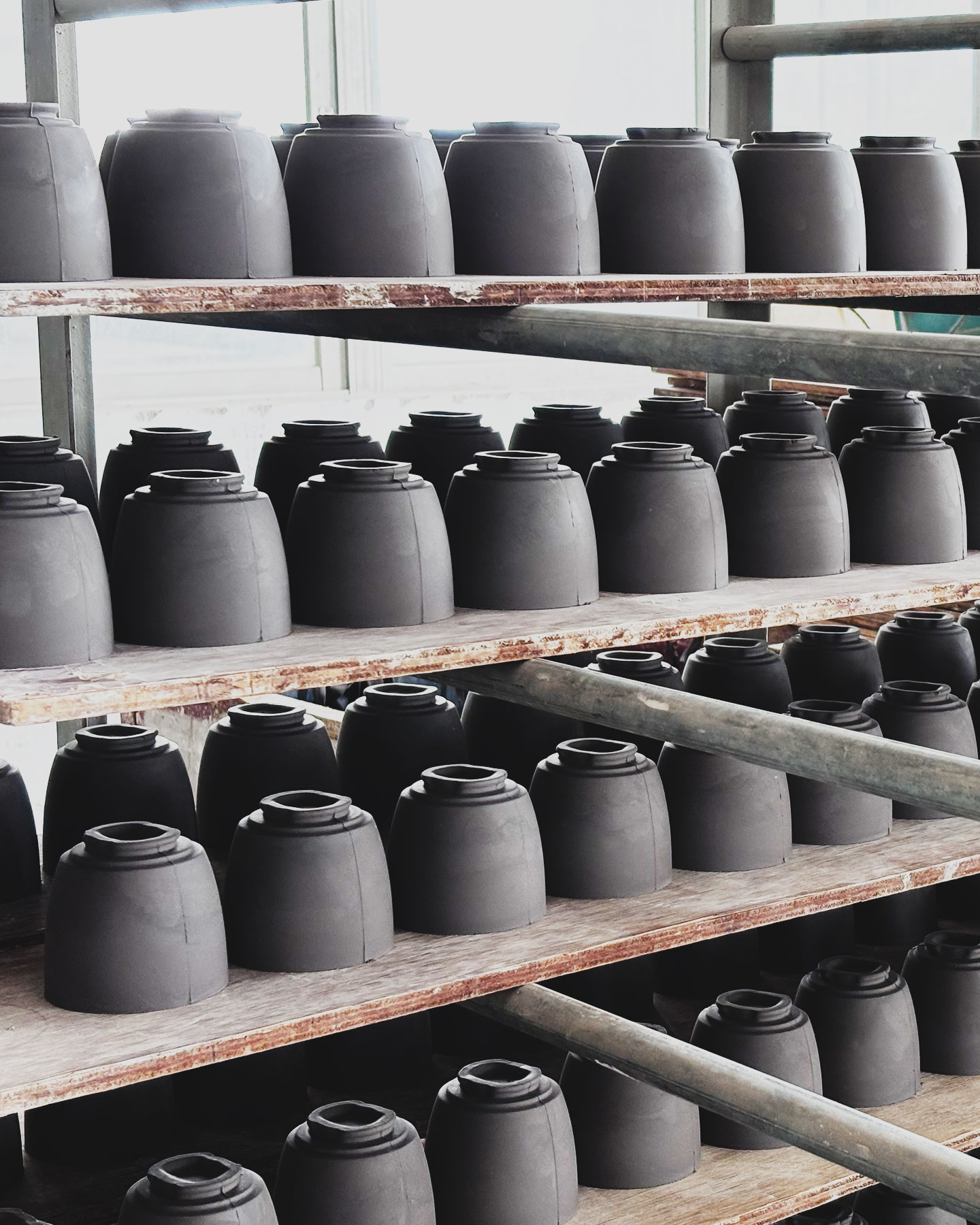
Have you ever walked into a restaurant and been drawn to the delicate brand logo on the dinnerware? Or received a ceramic gift box printed with a company logo, whose unique texture made you keep it to this day? Custom logo ceramic plates are more than just tableware—they are silent ambassadors of your brand, powerful tools for marketing and promotion, and sincere carriers of client appreciation.
Whether you’re a restaurant owner looking to unify your tableware with a brand image, a business buyer sourcing high‑quality promotional gifts, or a couple hoping to create one‑of‑a‑kind wedding keepsakes, this guide will walk you through every key step of custom logo ceramic plates—from process selection to design tips, cost breakdown to supplier selection. With this guide, you’ll avoid common pitfalls and effortlessly create your own custom ceramic tableware.
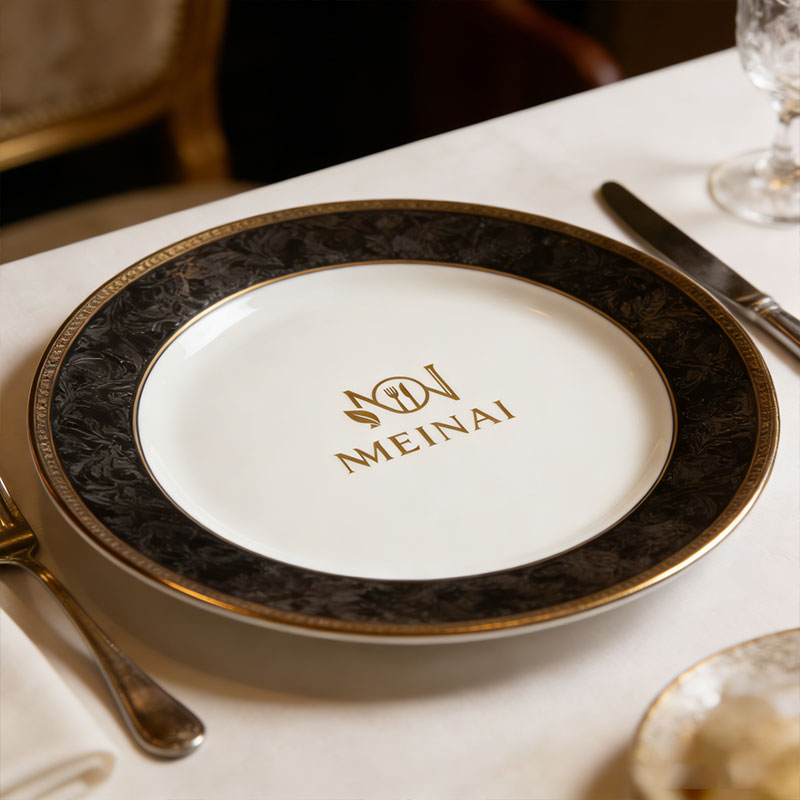
1. Why Choose Ceramic Dinner Plates for Custom Logos?
Among the many customizable products, ceramic dinner plates offer unique advantages:
High frequency of use – Plates are used daily, delivering far more brand exposures than other advertising formats.
Long-lasting durability – High-quality ceramic logos are fired at high temperatures and last as long as the dinnerware itself, never fading.
Premium texture – The gloss and warm touch of ceramics convey quality and thoughtfulness.
Practicality – Unlike Tshirts or cups that may be used once, dinner plates are reused over and over.
Shareability – When customers take photos of their meals and share them, the logo on the plate naturally becomes the focal point.
2. Four Main Customization Processes for Logo Ceramic Plates
The process you choose directly affects the final result, cost, and minimum order quantity. Here are the four most common logo customization techniques:
1. Under-glaze Decoration – Most Recommended ⭐⭐⭐⭐⭐
How it works: The logo is applied onto the unfired ceramic body, then covered with a transparent glaze and fired at high temperature. The pattern is protected underneath the glaze layer.
Advantages:
Extremely durable – the logo will not wear off, fade, or come into contact with food.
Highest food safety – the smooth, non-porous glaze is easy to clean.
Excellent appearance – the pattern is clear and soft, as if “melted into” the porcelain.
Disadvantages:
Higher MOQ (usually 500 pieces or more).
Limited color range – some colors change under high temperature.
Best for: Everyday restaurant dinnerware, branded gifts, any long-term use scenario.
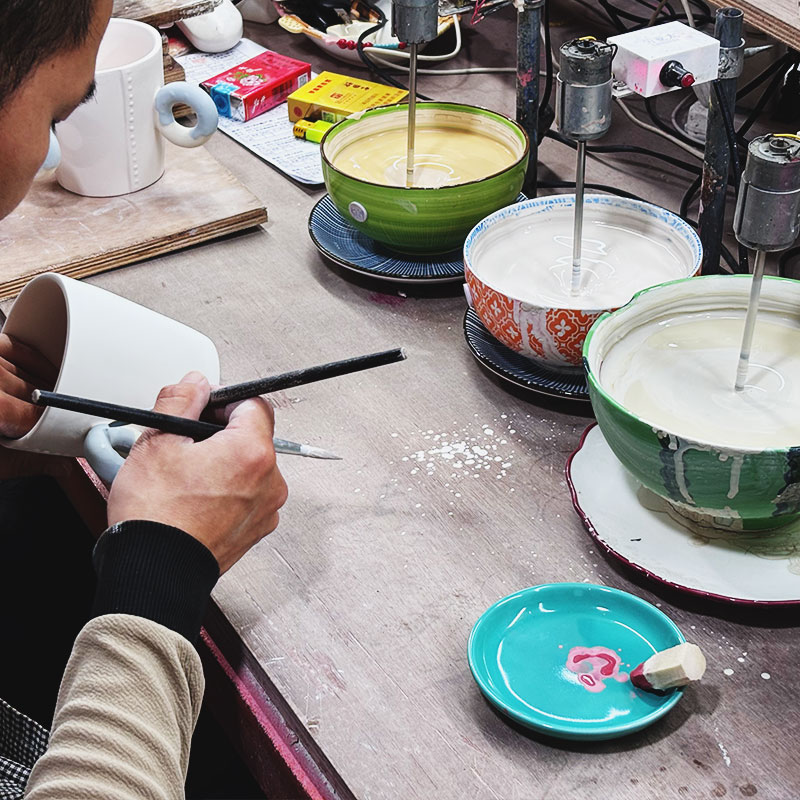
2. On-glaze Decoration – Suitable for Complex Designs
How it works: The logo is applied onto an already glazed and fired piece, then fixed by a second, lower-temperature firing (approx. 800°C).
Advantages:
Rich, bright colors – can reproduce complex designs.
Lower MOQ (100–300 pieces possible).
Disadvantages:
Less durable than under-glaze – may wear with repeated washing.
Risk of lead/cadmium – must use food-safe pigments.
Best for: Limited-edition gifts, decorative plates, infrequent use.
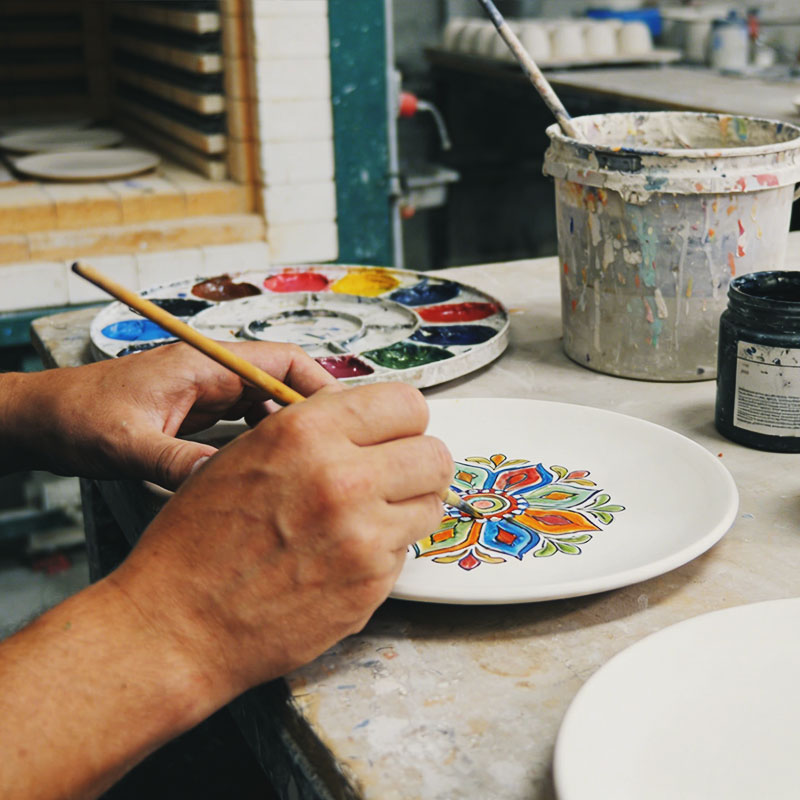
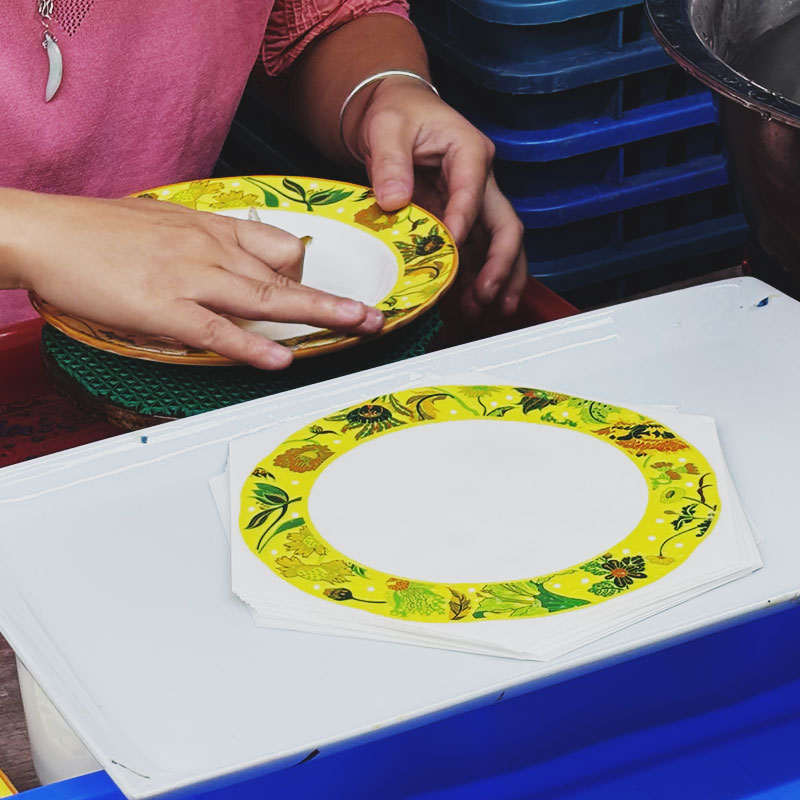
3. Decal Transfer – Best Value for Money ⭐⭐⭐⭐
How it works: The logo is printed onto special decal paper, then transferred to the ceramic surface and fired. Can be under-glaze or on-glaze decal.
Advantages:
Lowest cost, especially for large quantities.
High pattern precision – can replicate photo-like details.
Excellent consistency – every piece looks identical.
Disadvantages:
MOQ applies (typically 300–500 pieces).
Cannot personalize each piece differently.
Best for: Bulk restaurant orders, promotional giveaways, chain brands needing uniform dinnerware.
4. Hand-painted – One-of-a-Kind Artistry
How it works: A craftsman hand-paints the logo, making each piece an original.
Advantages:
Unique artistic value and exclusivity.
Ideal for high-end customization.
Disadvantages:
High cost and slow production.
Poor batch-to-batch consistency.
Not suitable for commercial food service.
Best for: High-end gifts, art collections, special commemoratives.
Our recommendation: For the vast majority of commercial uses (restaurants, corporate gifts, brand promotion), under-glaze or under-glaze decal is the best choice. They combine beauty and
durability — the logo never fades and fully complies with food safety standards.
3. Design Essentials: Details That Make or Break Your Logo
Moving your logo from a screen to ceramic requires special considerations:
Color Conversion
Computer screens emit light; ceramics reflect light. The same color values will appear darker and deeper on ceramic.
Choose high-contrast designs: dark logo on a light plate, or light logo on a dark plate.
Avoid extremely fine lines – lines thinner than 0.5mm may not print clearly after firing.
Gradients have limited effect – transitions are not as smooth as on printed paper.
Size and Placement
Center placement – Most common, suitable for logos 8–20cm in diameter.
Edge placement –Multiple placements – Some suppliers can place the logo both in the center and on the rim (extra cost).
Number of Colors
More colors mean higher cost and greater firing risk.
1-2 color designs are the most economical and stable.
For full-color photo effects, use on-glaze decal.
Text Readability
Minimum font size: at least 6 pt (approximately 2 mm high), and the font height on the printing plate surface should be kept below 6 pt.
Avoid using overly ornate fonts—simple, clear sans-serif fonts are the safest choice.
4. Customization Process: From Idea to Finished Product
The standard customization process typically includes the following 6 steps:
Step 1: Choose Your Base Plate Style [Image of basic style options]
Start by selecting a plate from the supplier’s existing product line as your “canvas”. Consider:
Shape (round, square, organic/irregular)
Size (ranging from 6 inches to 12 inches)
Glaze color (pure white, off-white, black, or other colors)
Rim style (smooth edge, embossed edge, scalloped edge)
Pro tip: If this is your first custom order…
Step 2: Provide Your Logo Design File
Suppliers typically require the following formats:
Vector files: AI, EPS, PDF, CDR (best choice)
High-resolution raster: 300dpi+ PNG or JPG
Color specifications: Pantone (PMS) or CMYK values
Step 3: Proofing / Sample Approval
Always request samples before mass production!
Typically 3-5 sample plates are produced
Cost is usually between $50–200 (deductible from the final order)
Verify that color, clarity, and placement meet expectations
Important: Do not skip this step! Ceramic firing involves variables; sampling helps avoid the risk of costly batch rework.
Step 4: Order Confirmation & Production
After the samples are approved, pay a deposit (typically 50%), and the factory begins mass production. Production lead times are generally:
Under-glaze / decal: 15–30 days
On-glaze: 10–20 days
Step 5: Quality Inspection
After mass production is completed, the supplier will perform quality inspection. You can also request:
In-process photos/videos
Random sample inspection (third-party inspection companies can be commissioned)
Step 6: Packaging & Logistics
Proper packaging is critical for custom ceramics. Professional suppliers will provide:
Individual bubble wrap bags
Custom foam inserts
Outer cartons marked “Fragile”
5. Common Questions & Pitfalls to Avoid
Q1: What is the minimum order quantity (MOQ) for custom logo plates?
Under-glaze decal: typically 300-500 pieces
On-glaze: 100 pieces (but higher unit price)
Hand-painted: no MOQ, but very high unit price
If you need fewer than 100 pieces, consider UV printing or laser engraving (less durable, not dishwasher safe).
Q2: Can logo plates go in the dishwasher?
Under-glaze: ✅ completely safe
On-glaze: ⚠️ hand wash recommended; dishwasher may cause wear over time
UV print / low-temperature decal: ❌ not dishwasher safe
Always confirm the process before ordering and tell the supplier how you plan to wash them.
Q3: How long does production take?
From order to delivery, typically 45-60 days (including sea freight). For urgent orders, air freight can shorten the lead time to 25-30 days.
Q4: How can I ensure accurate logo colors?
Provide Pantone numbers, not screen captures.
Allow 1-2 rounds of sample adjustments.
Understand the natural limitations of ceramic colors – certain bright colors (neon, metallic) cannot be achieved.
Q5: What is an acceptable breakage rate?
Ceramics are fragile. In international shipping, 2-3% breakage is generally acceptable. It is wise to order an extra 5% as backup.
6. Why Choose Us for Your Custom Logo Ceramic Plates?
At [meinaitableware] , we understand that every custom logo carries a story – the soul of a restaurant, the milestone of a company, the eternal memory of a wedding.
Our advantages:
✅ No mold fees – choose from 50+ in-stock plate shapes
✅ Low MOQ – 300 pieces for under-glaze decal, 200 pieces for on-glaze
✅ Free sample adjustment – first order includes one free sample round
✅ FDA certified – all products meet US food safety standards
✅ Durability guarantee – under-glaze process, logo lasts as long as the plate
✅ One-stop service – from design advice to customs clearance, bilingual customer support (Chinese + English)
Create your own branded imprint, starting with one dinner plate. Whether you need 500 plates for daily restaurant use or 5,000 pieces for a brand promotion, we deliver quality that exceeds expectations – within your budgetContact us for a free quote: send your logo and requirements to [info@meinaitableware.com] 👉Get FREE Sample Before Bulk Order!
Your brand deserves to be seen – at every meal.

